
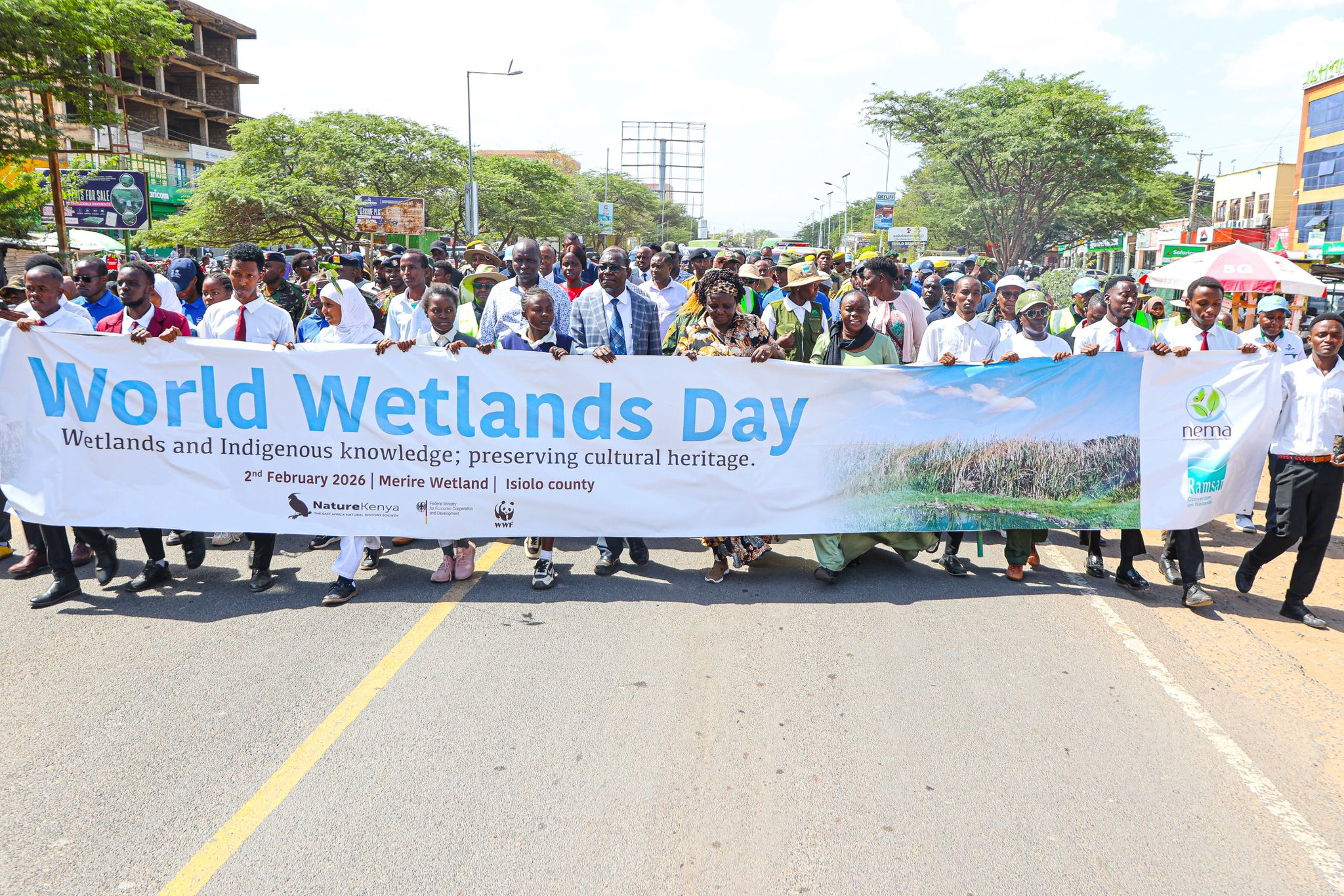
The government has renewed calls for community-driven protection of wetlands, underscoring the importance of Indigenous knowledge and local stewardship in safeguarding fragile ecosystems that sustain pastoral livelihoods in Kenya’s arid and semi-arid lands.
Cabinet Secretary for EAC, ASALs and Regional Development Beatrice Askul Moe appealed for national celebrations to mark World Wetlands Day at Merire Wetland in Isiolo County.
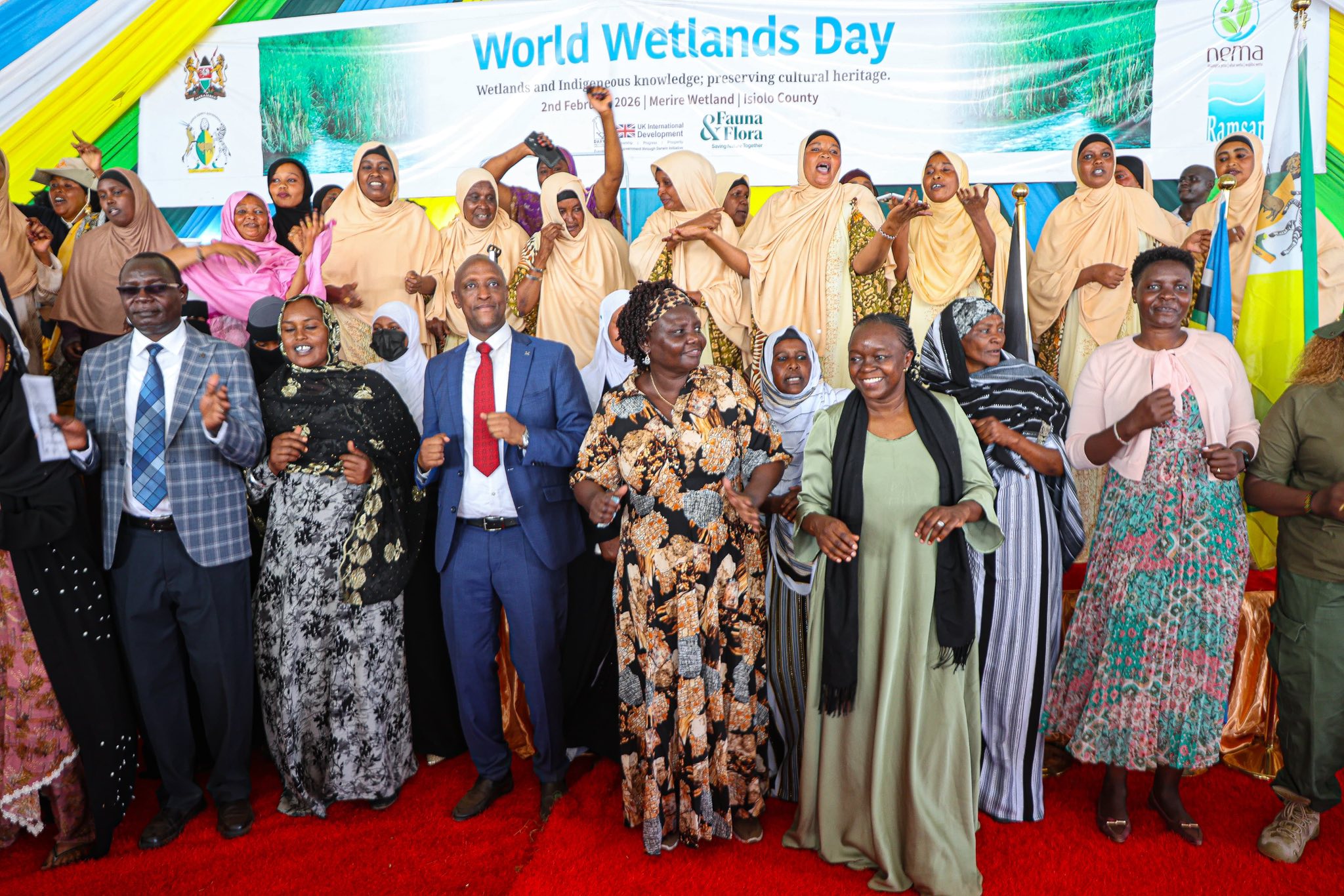
She was joined by Environment, Climate Change, and Forestry Cabinet Secretary Deborah Barasa for the event, which focused on raising awareness of the role communities play in conserving wetland ecosystems.
“In Merire Wetland, Isiolo County, I joined my colleague, Dr. Deborah Barasa, Cabinet Secretary for Environment, Climate Change and Forestry, for the World Wetlands Day national celebrations to raise awareness on the vital role indigenous and local communities play in protecting the wetlands ecosystem through generational traditional knowledge and cultural heritage,” Askul said.

She emphasised that wetlands remain indispensable to pastoral communities, particularly during prolonged dry periods.
“Wetlands are critical, high-value resources for the livelihoods of pastoral communities, acting as essential water sources, dry-season grazing and drought refuges for livestock in the Arid and Semi-Arid areas,” she noted.
The national commemoration was hosted by Isiolo Governor Abdi Ibrahim Hassan Guyo and Deputy Governor James Lowas, bringing together senior national and county officials, conservation stakeholders, and community representatives.
Among those present were leaders from the National Environment Management Authority (NEMA), including Board Chairman Emilio Mugo and Director-General Mamo B. Mamo, alongside other government officials and partners involved in environmental protection and climate resilience.
The event highlighted the growing urgency to protect wetlands from degradation amid climate change pressures, with the government stressing that long-term conservation success will depend on empowering local communities whose cultural heritage and traditional practices have historically preserved these ecosystems.
Officials said strengthening collaboration between national institutions, county governments and grassroots communities will be key to ensuring wetlands continue to provide water, pasture and ecological stability for vulnerable pastoral regions across northern Kenya.