
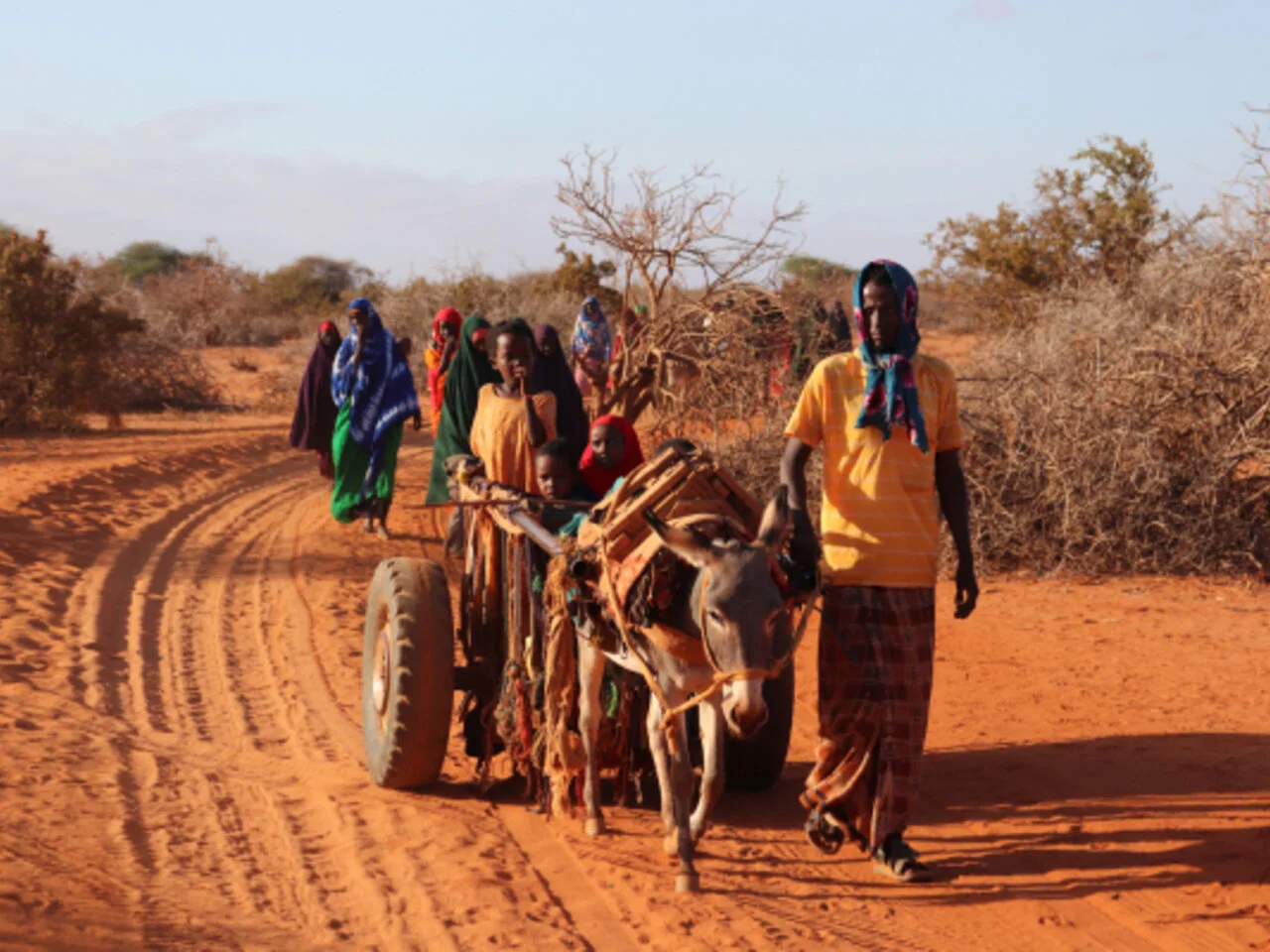
At least 6.5 million people in Somalia are projected to face crisis levels of hunger or worse, as a combination of drought, conflict, displacement, and limited humanitarian access pushes the country toward a major emergency, according to the World Food Programme.
The agency warns that conditions are rapidly deteriorating and are now approaching levels seen in 2022, when famine was narrowly averted following a large-scale humanitarian response.
Of those affected, approximately 2 million people are already facing emergency levels of hunger under the Integrated Food Security Phase Classification (IPC) scale.
Children are among the hardest hit. An estimated 1.84 million children are projected to suffer from acute malnutrition in 2026, including more than 483,000 expected to face severe acute malnutrition, placing them at heightened risk of illness and death without urgent intervention.
The crisis is being driven by successive climate shocks, with most regions experiencing three consecutive failed rainy seasons.
This has resulted in the lowest seasonal crop production in three decades, sharply reducing food availability. At the same time, rising food prices have placed basic commodities beyond the reach of many households.
Ongoing insecurity and conflict have compounded the situation, forcing hundreds of thousands of people to flee their homes in search of food, water, and safety.
The displacement has further strained already fragile communities and limited access to humanitarian assistance.
Despite these challenges, WFP continues to play a central role in the humanitarian response.
The organisation has provided emergency cash-based transfers to more than 380,000 people, enabling families to purchase food in local markets while supporting national social protection systems.
In addition, WFP is implementing long-term resilience-building programmes, including support for climate-smart agriculture, strengthening food systems, and working with government partners to expand social safety nets.
School feeding programmes are also providing nutritious meals to more than 100,000 primary school children, while supporting local farmers through home-grown procurement initiatives.
However, the agency cautions that current resources are far from sufficient to meet the scale of need.
WFP estimates it can currently reach only one in ten people requiring assistance, a figure that could decline further without urgent funding.
To sustain life-saving operations between March and August 2026, WFP is appealing for US$95 million.
Without this support, millions of vulnerable people risk losing access to critical assistance, potentially pushing the country closer to famine conditions.
Humanitarian partners are calling for immediate international support to scale up interventions and prevent a repeat of past crises.
As the situation continues to worsen, the need for coordinated, sustained action remains critical to saving lives and stabilising communities across Somalia.