
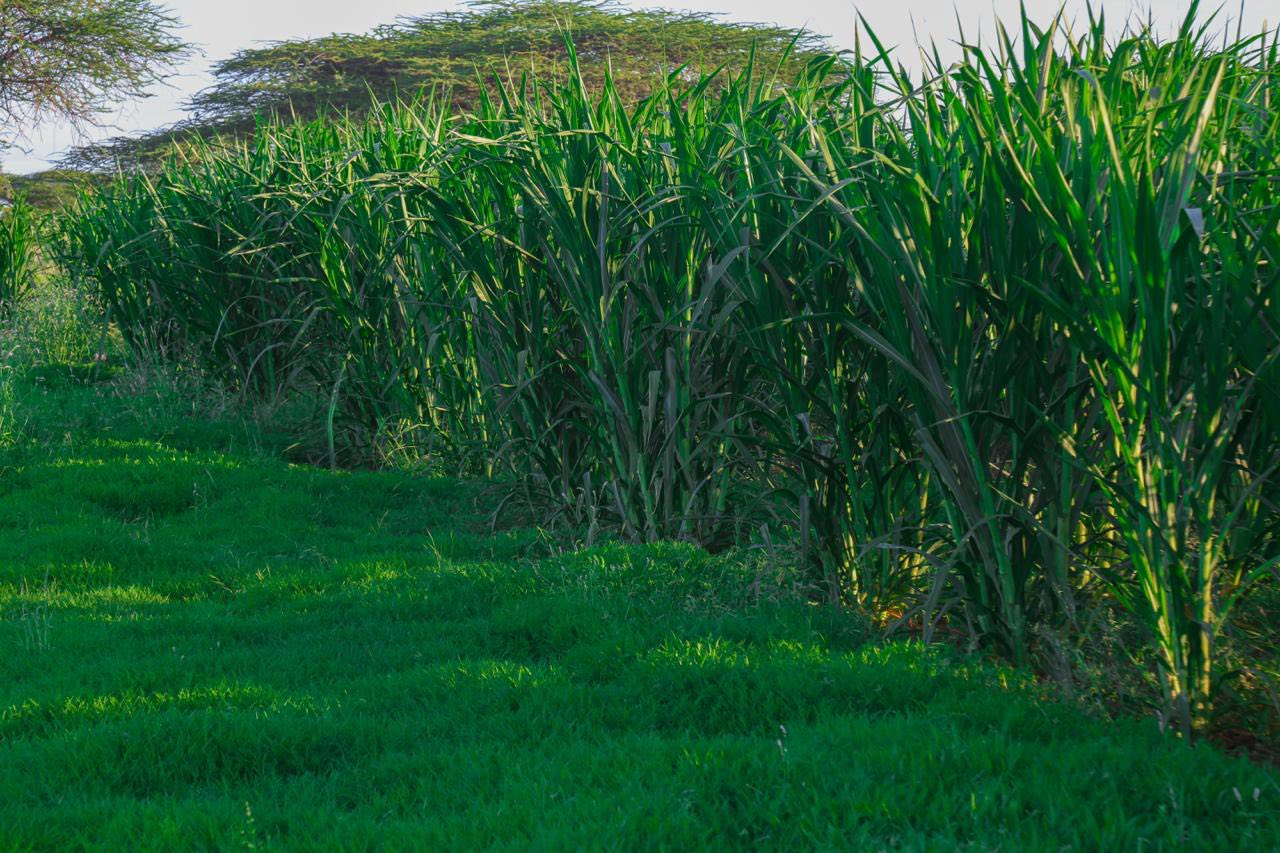
A model farm in Wajir South is emerging as a practical example of how sustainable drip irrigation can support climate-smart agriculture, strengthen livestock production, and improve food security in arid regions recovering from drought.
During a visit to Omar Dere Feedlot Farm in Qumbi, Wajir Governor Ahmed Abdullahi said the project demonstrates what can be achieved through practical knowledge, efficient water use, and consistent investment in productive farming systems.
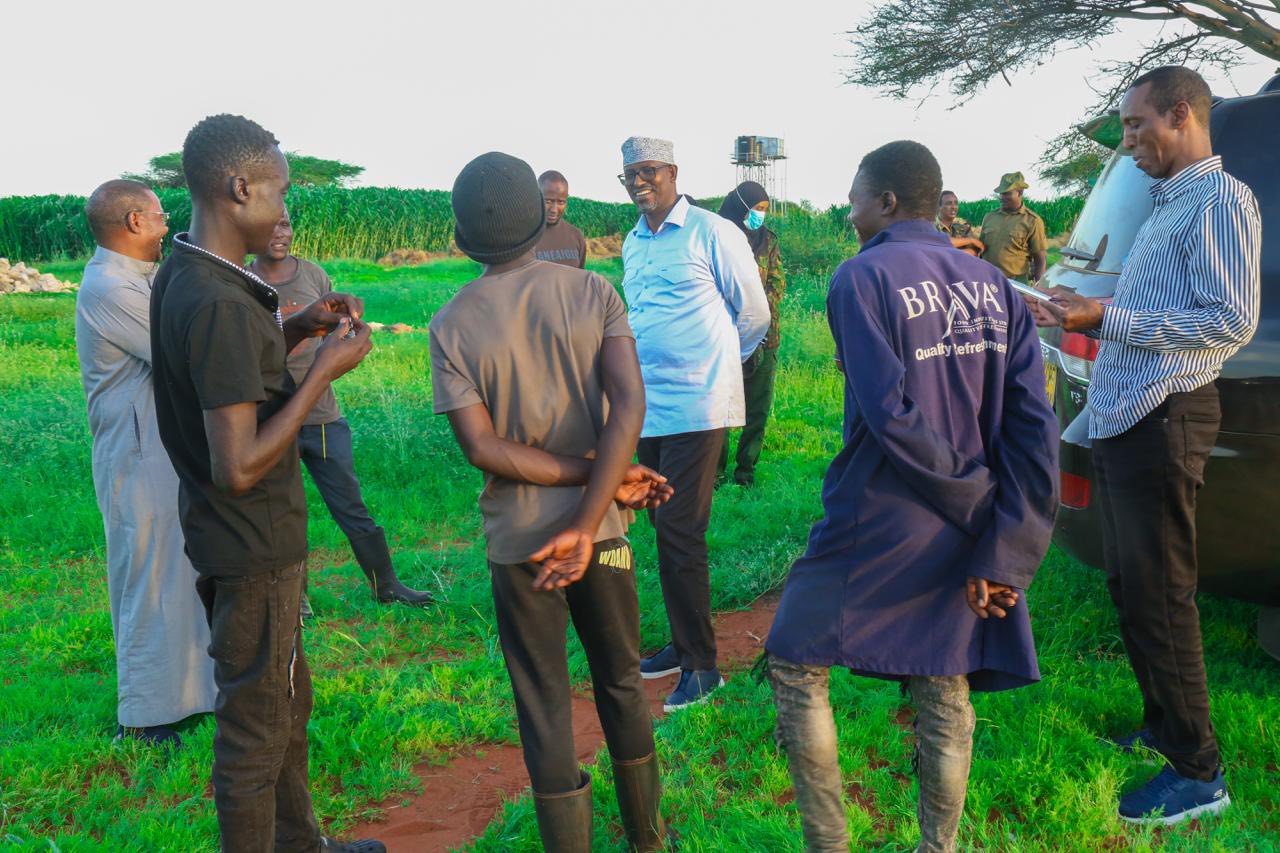
The governor toured the farm to recognise local innovation and encourage scalable agricultural solutions that can help communities rebuild livelihoods and strengthen resilience in the wake of prolonged drought.
At the centre of the farm’s success is a 20-acre drip irrigation system established by Dr. Somane Ismail, who has cultivated fodder crops including Juncao grass, sorghum, and Sudan grass to support livestock production in one of Kenya’s most climate-vulnerable regions.
Governor Ahmed said the farm stands out as a strong example of how sustainable irrigation can transform agricultural productivity in dryland areas where water remains scarce and climate shocks continue to disrupt livelihoods.
He noted that unlike conventional irrigation methods, drip irrigation offers a more sustainable and efficient approach by delivering water directly to plant roots, reducing wastage, conserving moisture, and enabling year-round production with minimal water use.
The system is particularly suited to arid and semi-arid regions such as Wajir, where water efficiency is critical to sustaining agricultural output and protecting fragile natural resources.
Governor Ahmed said the initiative reflects the kind of locally driven, climate-smart investment needed to build resilience in drought-prone counties and strengthen long-term food systems.
He said Dr. Somane’s work offers a practical model for how farmers can use sustainable irrigation, technical knowledge, and strategic crop selection to improve fodder production, support livestock health, and reduce vulnerability to climate-related shocks.
The governor noted that in a county still recovering from drought, such innovations are critical in helping households rebuild productive assets while supporting broader food security goals.
With the return of the rains, he urged residents to take advantage of the season by returning to their farms, investing in production, and adopting practical agricultural methods that can strengthen household incomes and improve local food systems.
He said sustainable irrigation, combined with timely cultivation and climate-smart planning, can help communities make better use of available water and reduce dependence on unpredictable rainfall.
The farm’s focus on fodder production also offers a strategic response to one of the biggest challenges facing pastoralist communities, livestock feed shortages during dry periods.
By producing high-value fodder under controlled irrigation, the model supports more reliable livestock feeding systems while reducing pressure on natural grazing lands.
Governor Ahmed said such approaches will be essential in building a more resilient agricultural future for Wajir, where sustainable production systems must increasingly form the backbone of climate adaptation and economic recovery.
As Wajir works to rebuild after successive droughts, the Omar Dere Feedlot Farm is offering more than a local success story, it is providing a practical pathway for climate-smart agriculture in Kenya’s drylands.