
More than 335,000 people in Mandera County are in urgent need of humanitarian assistance after the county was classified in the Alarm drought phase, according to the NDMA Kenya.
The worsening situation has been driven by consecutive seasons of below-average and poorly distributed rainfall, compounded by prolonged dry spells that have severely affected water availability, pasture conditions, and household food security.
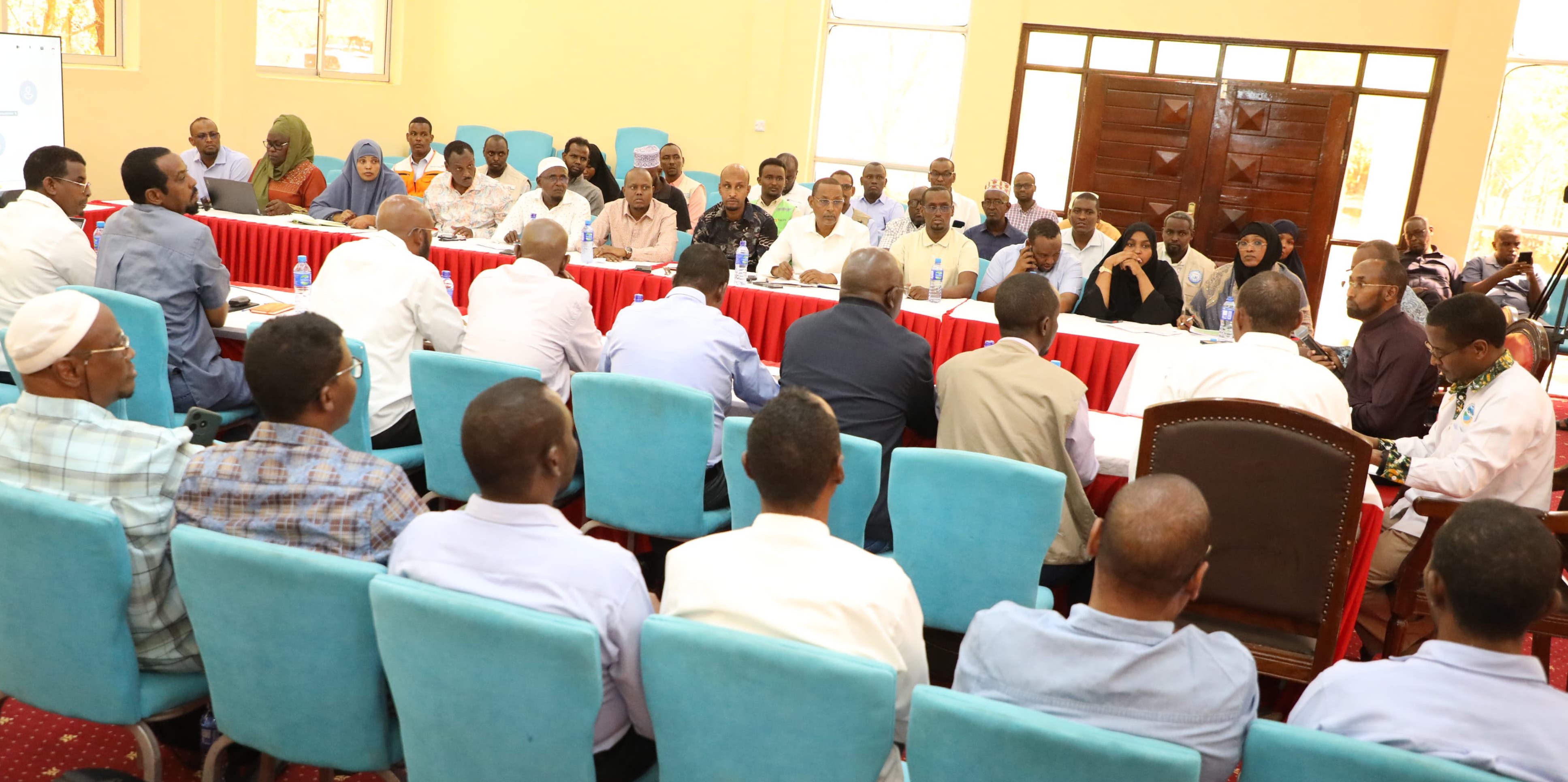
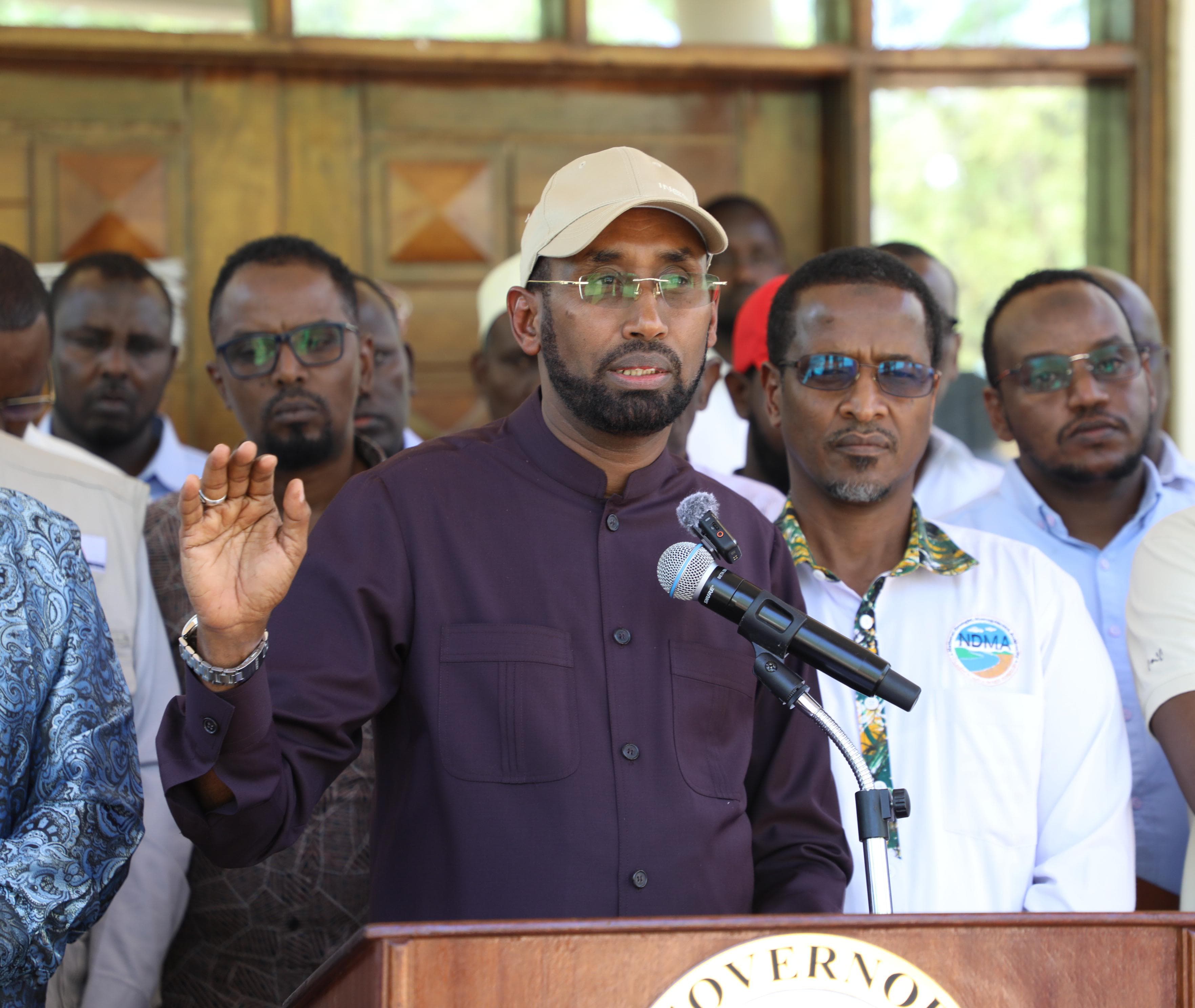
In response to the escalating crisis, NDMA Chief Executive Officer Hared Hassan on Tuesday attended a high-level County Steering Group meeting convened by Governor Mohamed Khalif, aimed at strengthening coordination and scaling up priority drought response actions under a whole-of-government approach.
The meeting brought together senior county and national government officials, including the County Commissioner, County Secretary, Members of the County Assembly, technical departments, and representatives from humanitarian and development partners operating in the county.
According to NDMA, vegetation cover across Mandera has declined sharply, with pasture and browse largely depleted. Nearly all earth pans, dams, and traditional water points have dried up, forcing communities to rely heavily on boreholes and emergency water trucking.
Currently, water access is being supported through 266 active water trucking sites serving both domestic and livestock needs.
However, authorities warn that the volumes delivered remain inadequate to meet rising demand.
Livestock are trekking increasingly longer distances in search of water and pasture, resulting in deteriorating body conditions and a marked decline in milk production.
“These impacts have significantly weakened household purchasing power and undermined food and nutrition security,” NDMA noted, adding that the situation could deteriorate further without urgent and sustained interventions.
To cushion affected communities, the County and National Governments, working closely with humanitarian partners, have rolled out a range of response measures.
These include water trucking using government and partner-supported water bowsers, food distribution to vulnerable households, repair and equipping of emergency boreholes, and fuel support to sustain water supply systems.
Integrated health, nutrition, and WASH outreaches are also ongoing, including mass nutrition screening and disease surveillance.
Livestock vaccination and treatment campaigns are being implemented to reduce animal losses, while cash transfers under the Hunger Safety Net Programme (HSNP) are supporting vulnerable households.
Additional interventions are being initiated, including expanded food distribution to tens of thousands of households, delivery of livestock drought pellets and range cubes, and cash transfers supported by partners such as the World Food Programme and the Kenya Red Cross Society.
Mandera is also set to benefit from World Bank–supported livestock feed and water interventions under programmes led by the Ministry of Agriculture, with the county accessing additional resources to support fodder supply through a revolving fund mechanism.
Governor Khalif acknowledged the continued support from the National Government and partners, noting that the county’s priority is to strengthen coordination, reduce duplication, and ensure assistance reaches the most affected households.
He added that efforts are underway to mobilise additional resources as drought impacts intensify.
The County Steering Group has recommended scaling up cash transfers, pre-positioning food and non-food items, expanding water trucking and borehole rehabilitation, increasing emergency livestock feed and veterinary services, and strengthening health, nutrition, education, and early warning systems.
NDMA said it will continue working closely with county and national authorities, as well as humanitarian and development partners, to mobilise resources and protect lives and livelihoods as Mandera grapples with one of its most severe droughts in recent years.