
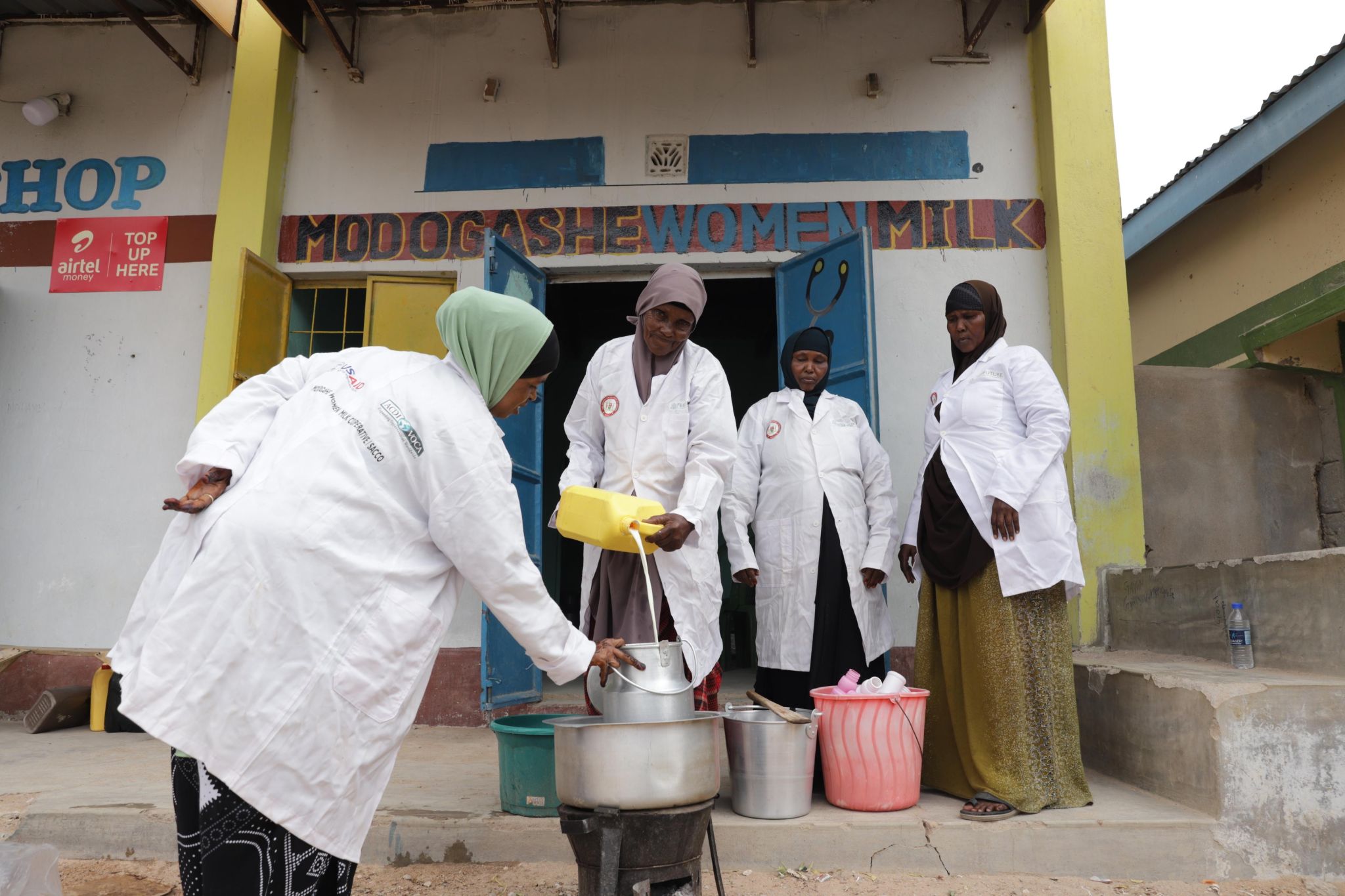
In the drought-prone drylands of northern Kenya, women are turning milk value addition and financial literacy into powerful tools for resilience, transforming traditional pastoral livelihoods into sustainable, climate-smart enterprises.
Through a deliberate shift towards entrepreneurship for resilience, Oxfam Kenya has been supporting pastoralist communities to diversify income sources beyond livestock, improve market access, and adopt practices that strengthen their ability to cope with recurring climate shocks.
In Garissa County, the focus has been on women, who are increasingly at the frontline of household economic survival during droughts.
By promoting financial literacy, savings culture, and small-scale enterprise development, Oxfam and its partners are helping households build cash reserves that can cushion them against moderate drought impacts.
Working closely with community-based organisations such as Pastoralist Girls Initiative (PGI), Oxfam has supported women’s groups engaged in milk production to move up the value chain.
According to Madina Yunis Mahat, Gender and Health Coordinator at PGI, the partnership has been grounded in local trust and community knowledge.
“These women are not only selling fresh milk; they are adding value by producing yoghurt and sour milk from surplus supply, which they sell locally,” she said.
“This has improved incomes while reducing losses, especially during peak production periods.”
PGI operates across Garissa, Tana River and Kilifi counties, areas classified as arid and semi-arid lands (ASALs), and has used grants and targeted support to strengthen women-led enterprises while also addressing broader challenges such as climate change and gender-based violence.
One such success story is the Modogashe Women Milk Savings and Credit group. Its secretary, Siyatha Hussein, says financial literacy marked a turning point for the group.
“In June 2024, a team from Cooperative Bank invited us to a seminar where we were trained on saving,” she recalled. “Each member contributed KSh 50 per day, which added up to KSh 1,500 per month.”
With support from the bank, the group opened a savings account, received a KSh 200,000 deposit, and was linked to Livestock Market System, which provided essential equipment, including a solar-powered fridge, milk packaging containers, jugs and a generator.
PGI further supported the group with a KSh 121,000 grant to purchase an additional generator and branding materials for packaging.
Beyond milk, the group has diversified into goat rearing and sales at the Garissa Livestock Market, further strengthening income streams and reducing dependence on a single livelihood.
Oxfam credits partnerships with institutions such as Danida Fellowship Centre and Oxfam Denmark for enabling sustained investment in women-led resilience initiatives.
The combination of entrepreneurship, savings, and value addition, women in Garissa are not only improving household incomes but also building buffers against climate shocks.
As droughts become more frequent and severe across northern Kenya, these locally driven solutions are proving that resilience can be built, one savings group and one litre of value-added milk at a time.