
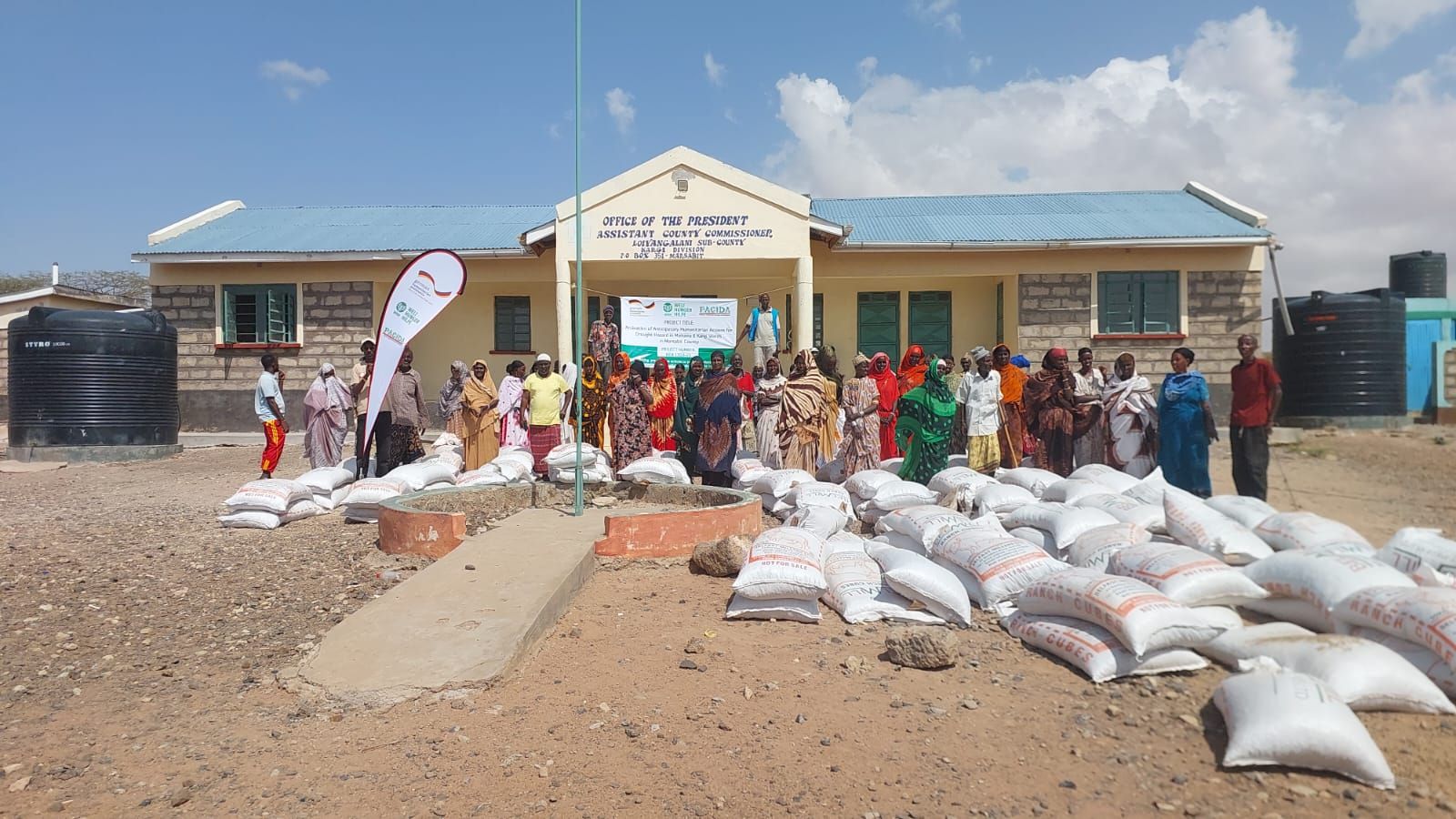
Communities in drought-prone areas of Marsabit County are receiving early livestock support under a three-month Anticipatory Action Project designed to cushion households from the impacts of an expected dry spell.
The initiative is being implemented by PACIDA in partnership with Welthungerhilfe, with funding from the German Federal Foreign Office.
It targets vulnerable pastoralist communities before drought conditions escalate into a full-blown crisis.
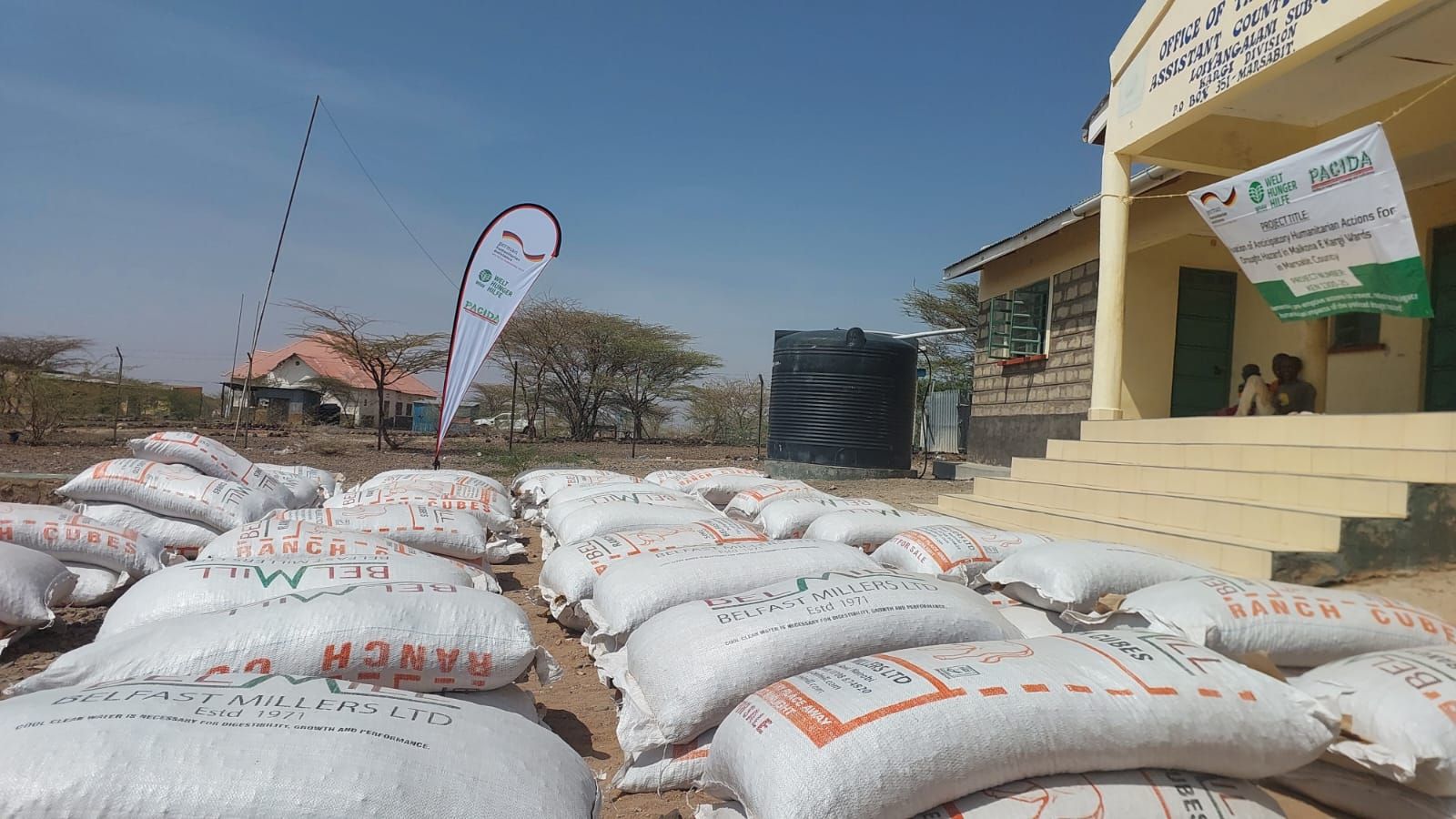
Under the project, households are receiving high-protein range cube feeds aimed at protecting livestock health and productivity.
The preventive intervention seeks to reduce livestock losses, safeguard household incomes, and stabilize food and nutrition outcomes during the anticipated drought period.
The project is being implemented in Marsabit County, specifically in Maikona and Kargi wards.
In Maikona, the intervention covers Maikona town, Medate Kuro and Arano sub-locations, while in Kargi it targets Kargi, Kurkum, Bagasi and Kambinye sub-locations.
A total of 1,800 households are set to benefit, with 1,260 households reached in Maikona and 540 in Kargi.
Priority is being given to households with vulnerable livestock breeds, including those with at least one lactating animal, as well as families most at risk of malnutrition.
Additional socio-economic vulnerability indicators are being used to ensure assistance reaches those most in need.
The project also places strong emphasis on inclusion, prioritising female-headed households and families from marginalised groups such as widows, persons with disabilities, and ethnic minorities.
By acting ahead of deteriorating conditions, the Anticipatory Action Project represents a shift from reactive humanitarian response to proactive risk reduction.
Implementers say the approach not only saves lives and livelihoods but also reduces the long-term cost of emergency response once drought conditions fully set in.