
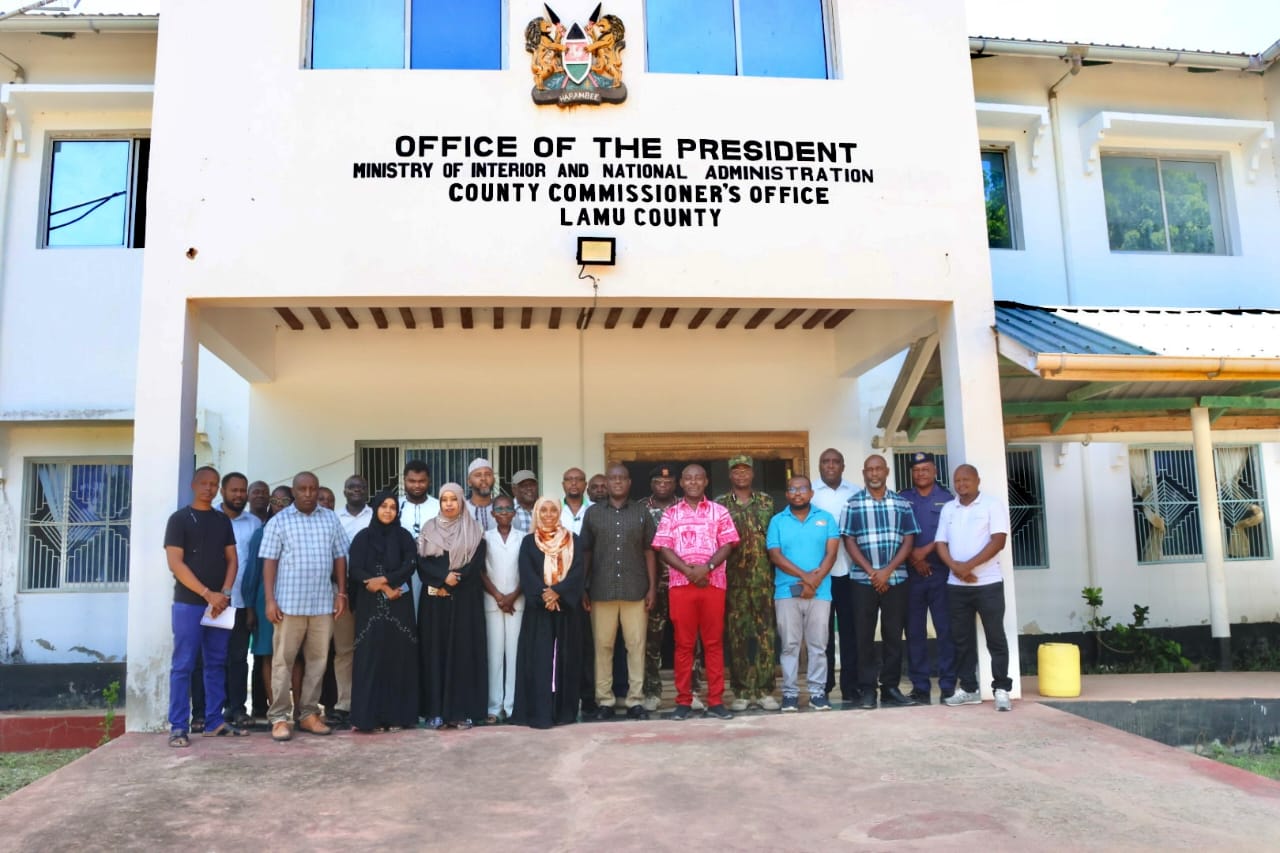
Lamu County is gaining national recognition as a model for resilience, following a high-level County Steering Group (CSG) meeting that underscored the power of coordinated, multi-agency action in addressing drought-related challenges and building sustainable systems.
The meeting, co-chaired by County Executive Committee Member for Lands, Water, Energy and Infrastructure Ms. Tashrifa Abubakar and Deputy County Commissioner Mr. Nyongeaa, brought together representatives from government agencies, development partners, humanitarian organizations, and local communities.
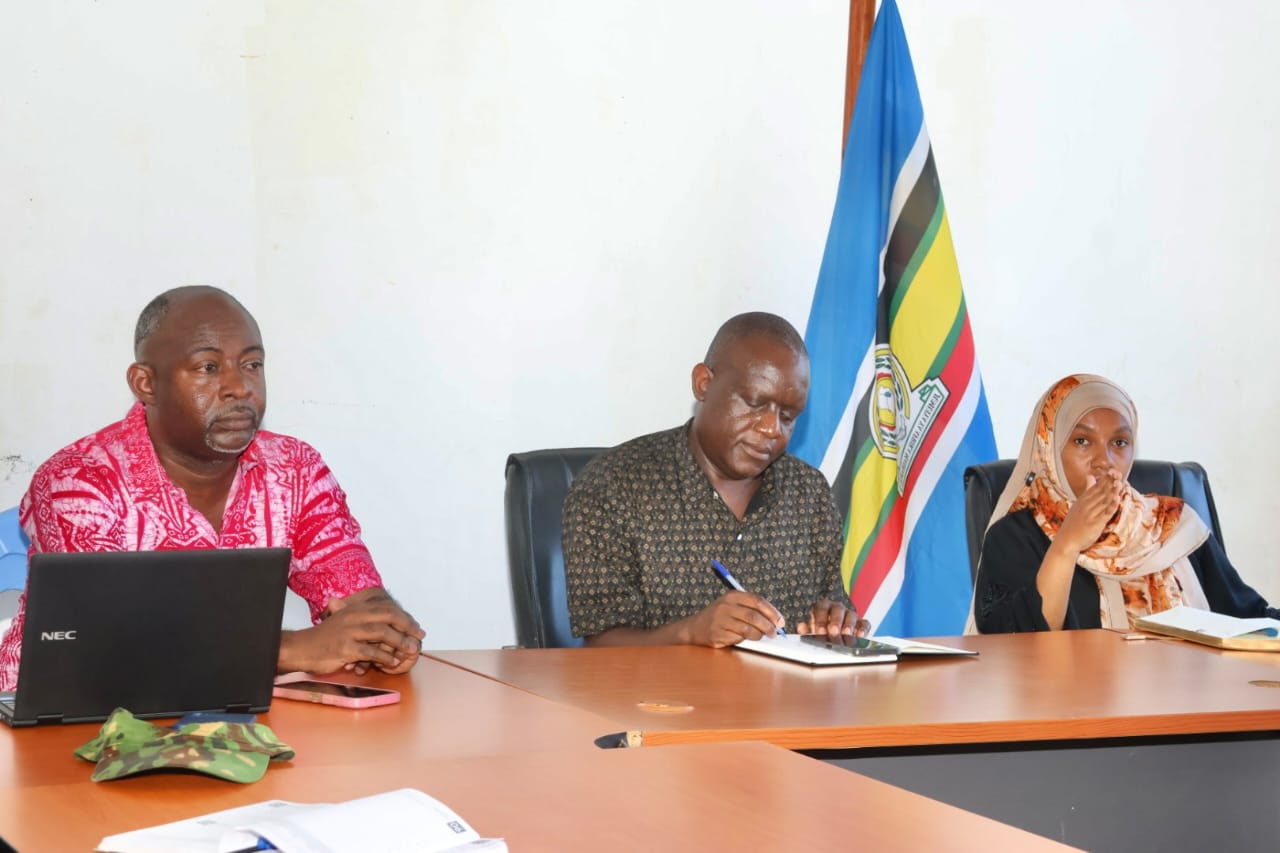
Convened under the secretariat of the National Drought Management Authority (NDMA), the forum focused on the rollout of the Ending Drought Emergencies (EDE) Phase II framework.
EDE Phase II marks a strategic shift from reactive drought response to long-term resilience building.
The framework promotes integrated interventions across key sectors including water access, food security, peacebuilding, climate adaptation, and institutional coordination.
Stakeholders at the meeting emphasised the critical role of the CSG as a central coordination platform that aligns efforts, strengthens accountability, and supports timely decision-making.
A major highlight of the meeting was the celebration of Lamu’s global recognition at the 2026 Water Transversality Global Awards, where the Kiunga Desalination and Water Management Initiative was named Best Community Impact Project.
The initiative has been widely praised for transforming a crisis situation into a model of sustainable intervention.
The Kiunga project was initiated in response to severe water scarcity that had triggered resource-based conflicts in the area.
Following deliberations by the CSG, a series of coordinated interventions were implemented, including peace dialogue forums, community-led water rationing systems, installation of water storage infrastructure by NDMA, and the introduction of sustainable water solutions.
These efforts significantly reduced conflict, improved access to safe water, and restored social cohesion in one of Lamu’s most vulnerable regions.
Leaders at the meeting commended the CSG for its effective coordination and commitment to collaborative action.
Ms. Abubakar lauded the team’s efforts, noting that the county government remains committed to scaling up successful interventions to benefit more communities.
“The Kiunga success story reflects what can be achieved through strong coordination and partnership. As a county, we are focused on expanding these gains to reach even more vulnerable areas,” she said.
Director for Peacebuilding and Disaster Management Shee Kupi highlighted the importance of sustained collaboration, stating that the global recognition serves as a call to deepen partnerships across sectors.
Similarly, County Drought Coordinator Mr. Samuel Githae described EDE Phase II as a “game changer” in strengthening resilience and urged stakeholders to fully adopt the framework, particularly in light of declining drought financing.
Development partners also reaffirmed their commitment to supporting fragile regions. Mr. Charles Muthoka of World Vision emphasised that ongoing work in areas such as Kiunga and Basuba complements broader peacebuilding efforts essential for long-term stability.
Community representatives welcomed the recognition, with Mr. Atik Mohammed expressing gratitude on behalf of local residents for the timely interventions that helped ease water-related tensions.
He noted that the award reflects collective effort and dedication by all stakeholders involved.
As Lamu moves forward with the implementation of EDE Phase II, stakeholders have pledged to replicate successful models like the Kiunga initiative across other vulnerable areas.
The county’s approach continues to demonstrate that strong coordination, community engagement, and integrated solutions are key to transforming drought challenges into opportunities for sustainable development.
With its growing track record, Lamu is setting a benchmark for counties across Kenya in building resilience and safeguarding livelihoods in the face of climate-related shocks.