
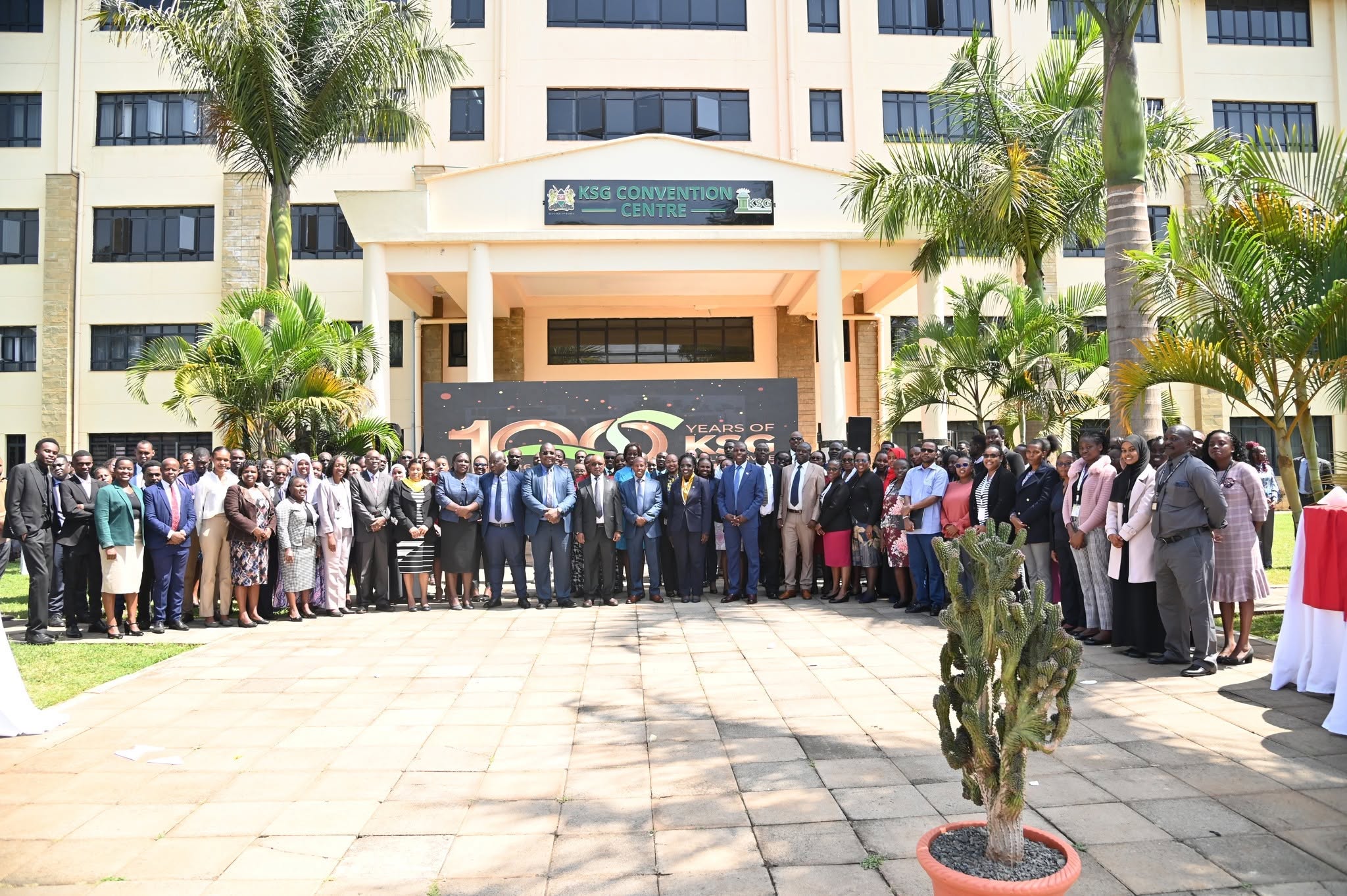
The Kenya School of Government (KSG) has marked a historic milestone by celebrating its 100th anniversary, reaffirming its commitment to shaping ethical leaders, strengthening public institutions, and positioning itself as Africa's premier centre for governance, public sector innovation, and leadership development.
The centenary celebrations, held at the Lower Kabete and Nairobi campuses, brought together senior government officials, members of the diplomatic corps, development partners, academia, state corporations, alumni, and distinguished guests to reflect on KSG's century-long contribution to Kenya's public service while unveiling an ambitious vision for its next 100 years.
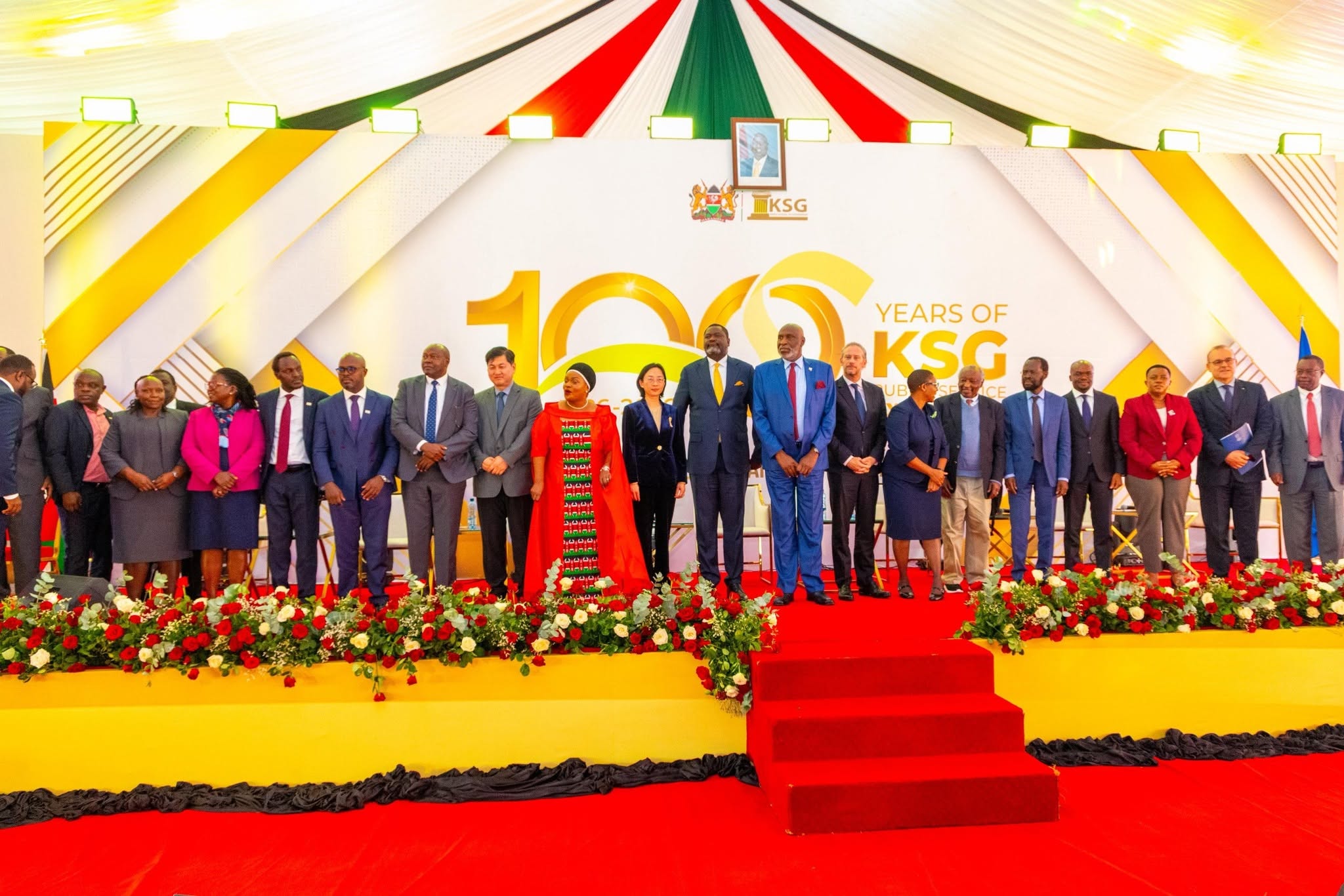
The celebrations were graced by Cabinet Secretary for Public Service, Human Capital Development and Special Programmes Geoffrey Ruku, Attorney General Dorcas Oduor, Kisumu Governor Prof. Anyang' Nyong'o, Principal Secretaries, Inspector General of Police Douglas Kanja, industrialist and philanthropist Dr. Manu Chandaria, representatives of the diplomatic community, development partners, and leaders from across the public and private sectors.
A key highlight of the celebrations was the official launch of the Rt. Hon. Raila Amolo Odinga Regional Leadership and Governance Academy and the Chandaria Innovation Center, two landmark initiatives expected to strengthen executive leadership development, governance research, public policy innovation, and strategic foresight across Kenya and the African continent.
Speaking during the celebrations, Kenya School of Government Director General Prof. Nura Mohamed said the institution was entering its second century with a renewed mission to prepare leaders capable of responding to increasingly complex governance challenges.
"We envision a Kenya School of Government that is not only a premier centre for leadership development, but also a continental hub for strategic foresight, governance innovation, executive learning, applied research and policy dialogue," he said.
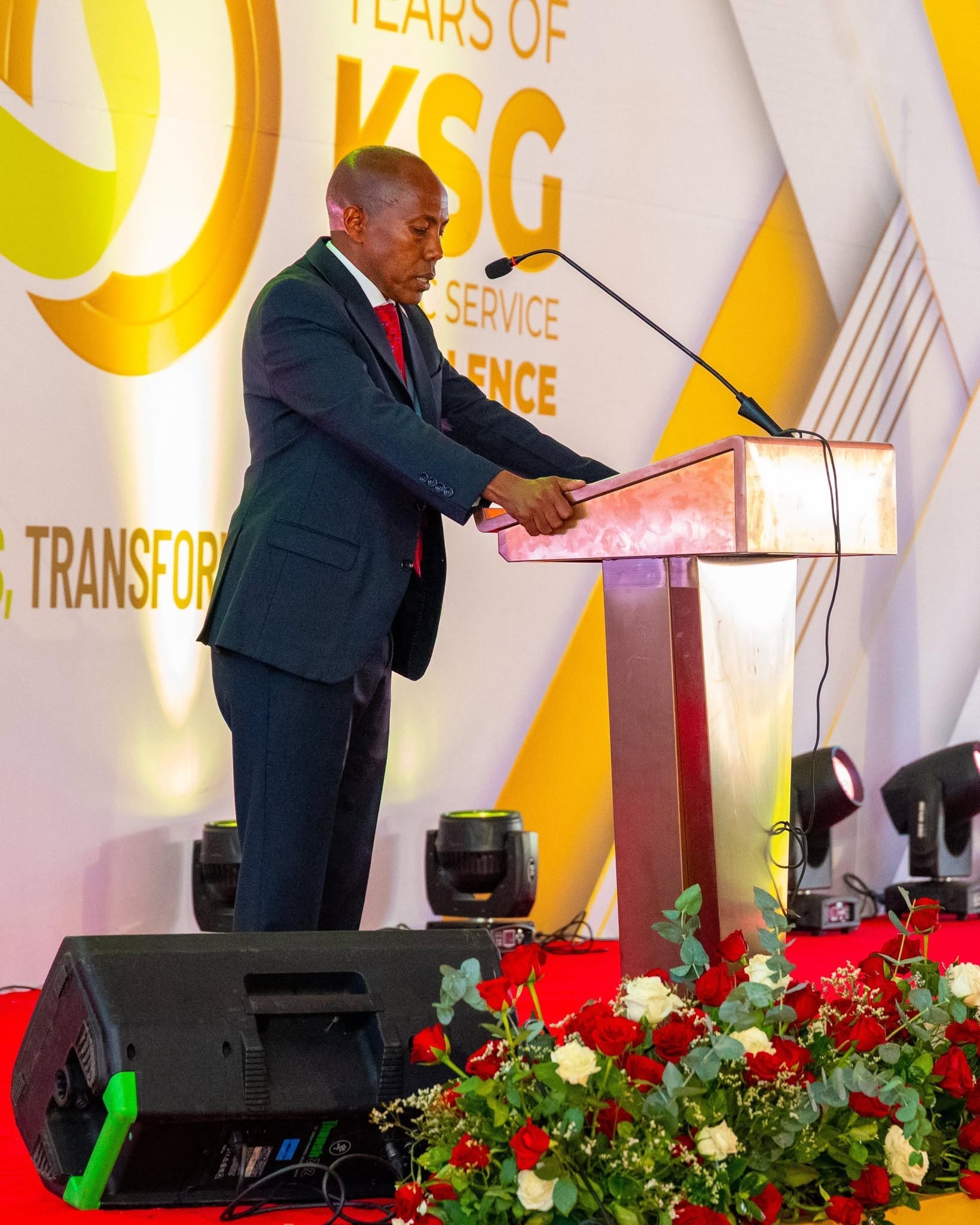
He noted that the newly launched academy and innovation centre represent a significant investment in Africa's leadership future, creating spaces where future leaders will challenge conventional thinking, inspire innovation, strengthen governance, and develop practical solutions to emerging public policy challenges.
Prof. Nura emphasised that KSG's greatest achievement lies not in its physical infrastructure or academic programmes, but in the generations of public servants it has trained over the past century.
"One of the greatest measures of our success is seeing men and women step forward, equipped to serve our nation with greater purpose, competence and integrity."
He challenged graduates and public servants to embrace leadership founded on integrity, humility, and service to citizens.
"Leadership is not defined by the office you hold, but by the lives you touch, the institutions you strengthen and the legacy of service you leave behind."
Reflecting on Kenya's governance journey, Kisumu Governor Prof. Anyang' Nyong'o underscored the central role of strong institutions in national development.
"Nations do not become prosperous by accident; they become prosperous by learning, building strong institutions, and pursuing a shared national vision."
He added that Kenya's future prosperity would depend on ethical leadership, institutional reforms, citizen participation, and a long-term development strategy informed by lessons from successful economies around the world.
Cabinet Secretary Geoffrey Ruku praised the Kenya School of Government for its enduring contribution to building a professional and effective public service over the past century.
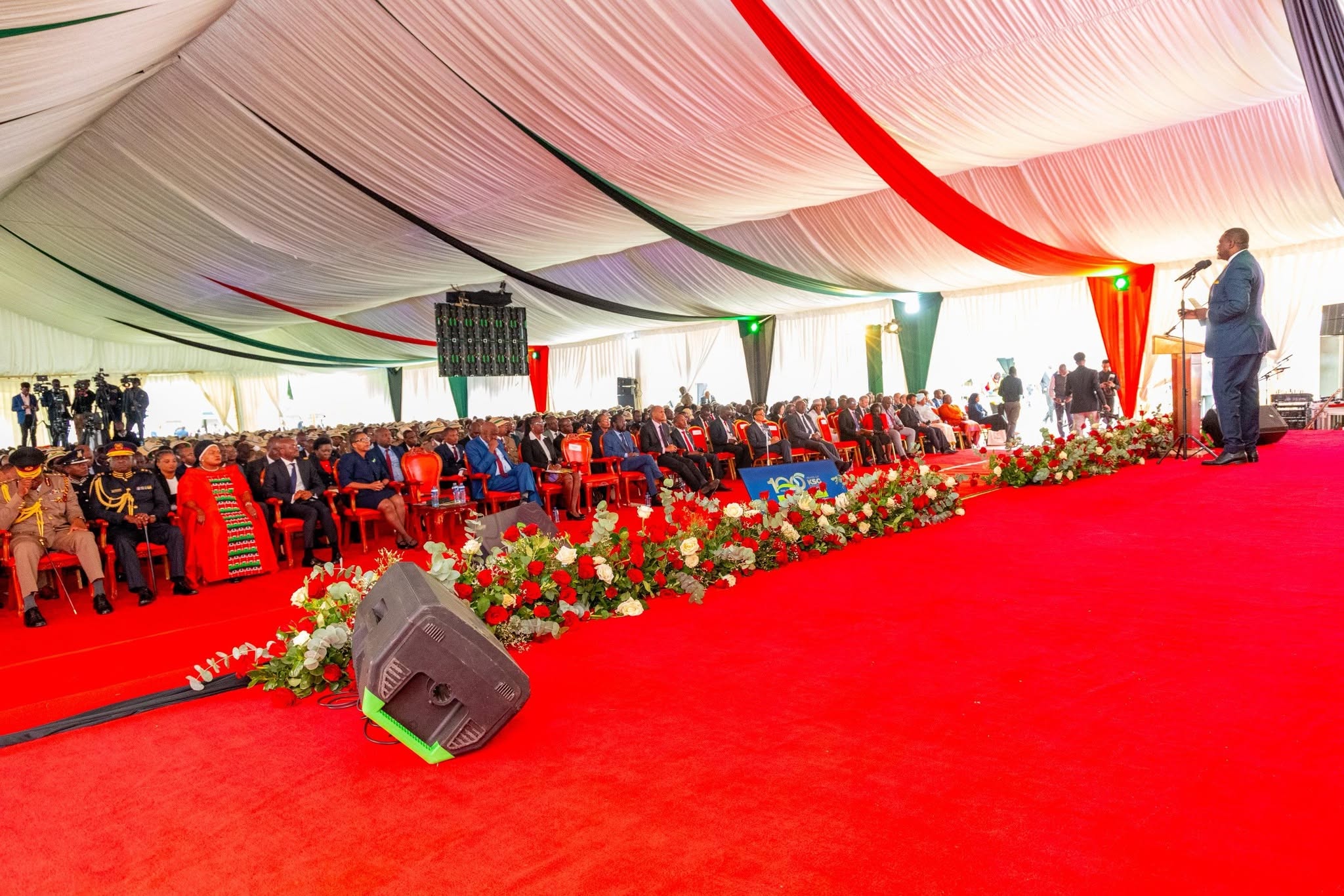
He observed that generations of public servants had benefited from the institution's training, research, and consultancy programmes, which have equipped them with the knowledge, values, and leadership skills needed to serve Kenyans with professionalism and integrity.
"The success of any government's agenda depends on the capacity of its public service. Policies and programmes can only transform lives when implemented by competent, ethical, and innovative public servants," the Cabinet Secretary said.
The celebrations also highlighted KSG's expanding investment in youth leadership development through initiatives such as the Under the Tree Series, as well as efforts to improve public service delivery through the Centre for Customer Service Excellence.
The institution also recognised major milestones in leadership development, including the graduation of participants in the Diploma in Public Administration programme, the induction of Deputy County Commissioners, and the recognition of graduates of the Leadership Programme for National Transformation.
According to Prof. Nura Mohamed, these achievements demonstrate KSG's enduring role in preparing leaders capable of strengthening institutions and delivering meaningful public value.
The Institute of Human Resource Management (IHRM) joined the celebrations, commending KSG for its century-long contribution to developing transformative leaders and advancing excellence in public service.
The two institutions reaffirmed their partnership in promoting professional excellence and human capital development across Kenya's public sector.
As the celebrations concluded, KSG leaders reflected on the significance of reaching the centenary milestone, not merely as a celebration of longevity, but as an opportunity to redefine the future of governance and leadership.
"The next hundred years will not be defined by how well we preserve our history, but by how boldly we shape the future," Prof. Nura said.
With the launch of new centres of excellence, strengthened partnerships, and a renewed commitment to innovation, the Kenya School of Government enters its second century determined to prepare ethical, visionary, and transformative leaders capable of strengthening institutions, advancing good governance, and shaping Africa's development for generations to come.