

The Kenya Red Cross Society has launched a new livestock breed improvement programme to strengthen the resilience of pastoralist communities that continue to suffer losses from recurring drought.
The initiative, rolled out in partnership with the County Government of Kajiado and the Kenya Animal Genetic Resources Centre, will initially target 1,000 cattle in Kajiado County.
In this region, livestock remains the primary source of food and income for many pastoralist households.
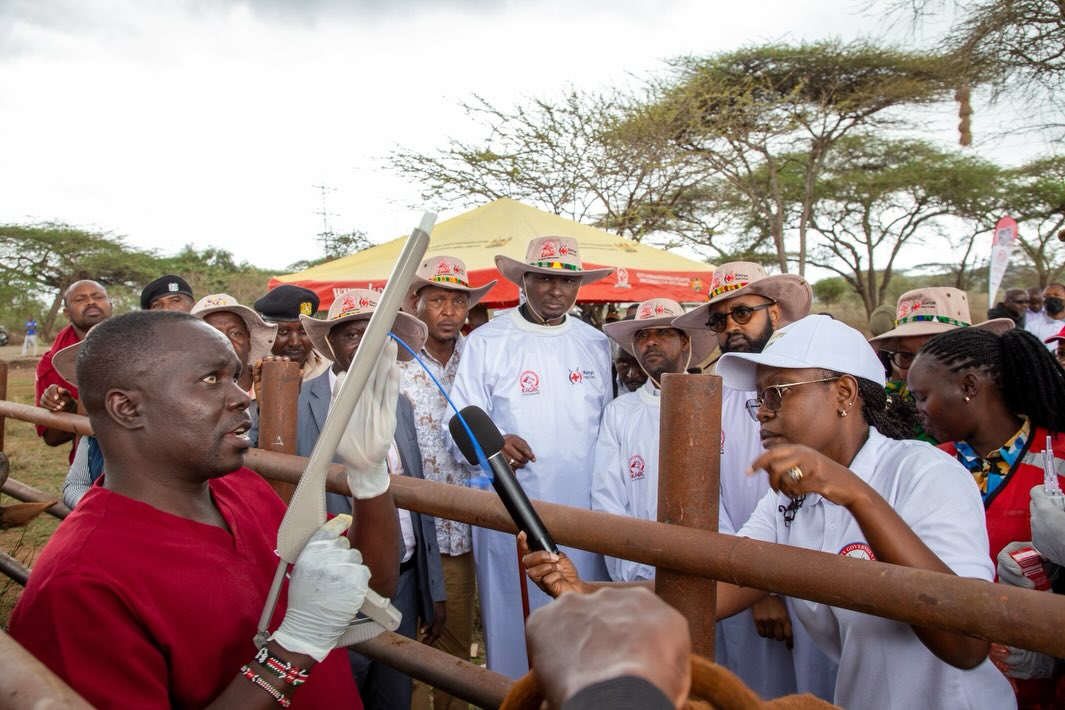
According to the humanitarian organisation, repeated drought cycles have significantly reduced livestock numbers in pastoral areas, threatening food security and livelihoods.
By improving cattle breeds to produce higher yields and better withstand harsh climatic conditions, the programme aims to help communities reduce livestock losses and build long-term resilience.
Officials said the project focuses on introducing improved livestock genetics that can better survive drought conditions while increasing productivity in terms of milk and meat output.
The approach is expected to provide pastoralist families with more reliable income and nutritional benefits even during prolonged dry periods.
The programme will not be limited to Kajiado. The Kenya Red Cross Society announced plans to expand the initiative to other drought-prone regions, including Tana River County, Baringo County and West Pokot County.
Humanitarian and agricultural experts note that strengthening livestock breeds is a critical step toward climate adaptation in Kenya’s arid and semi-arid lands, where communities rely heavily on pastoralism for survival.
By combining improved breeding practices with partnerships between government and humanitarian organisations, the programme seeks to safeguard pastoral livelihoods and enhance food security in some of Kenya’s most climate-vulnerable regions.