
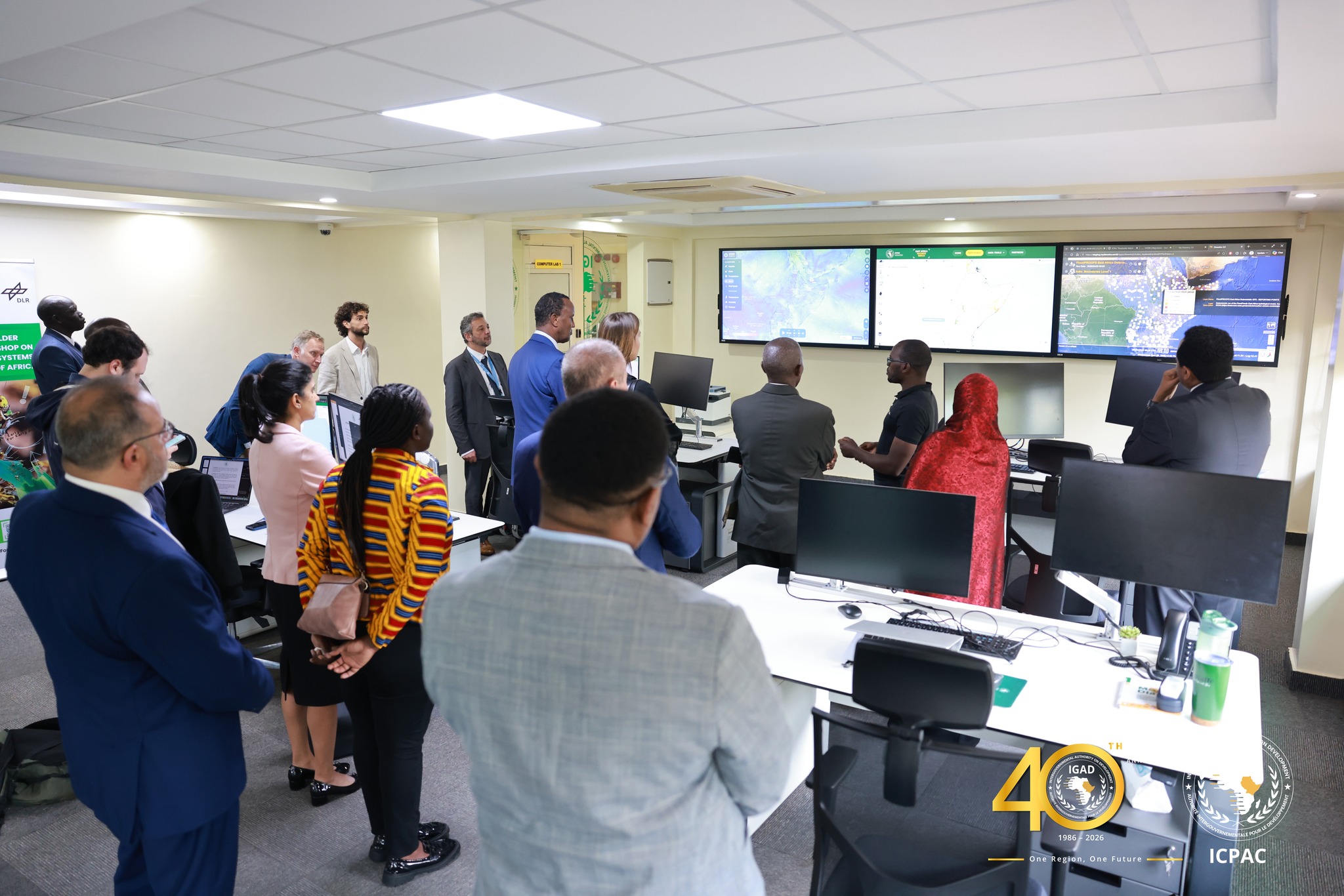
The Intergovernmental Authority on Development (IGAD) has reinforced regional efforts to strengthen disaster preparedness and climate resilience following a high-level engagement with international and regional partners in Nairobi focused on disaster risk management, early warning systems, and anticipatory action in Eastern Africa.
IGAD hosted an Italian delegation alongside key partners including the United Nations Office for Disaster Risk Reduction (UNDRR) Africa, EU ECHO, Kenya’s National Disaster Operations Centre (NDOC), the National Drought Management Authority (NDMA), and the Kenya Red Cross, for strategic discussions on enhancing coordinated disaster preparedness and response across the region.
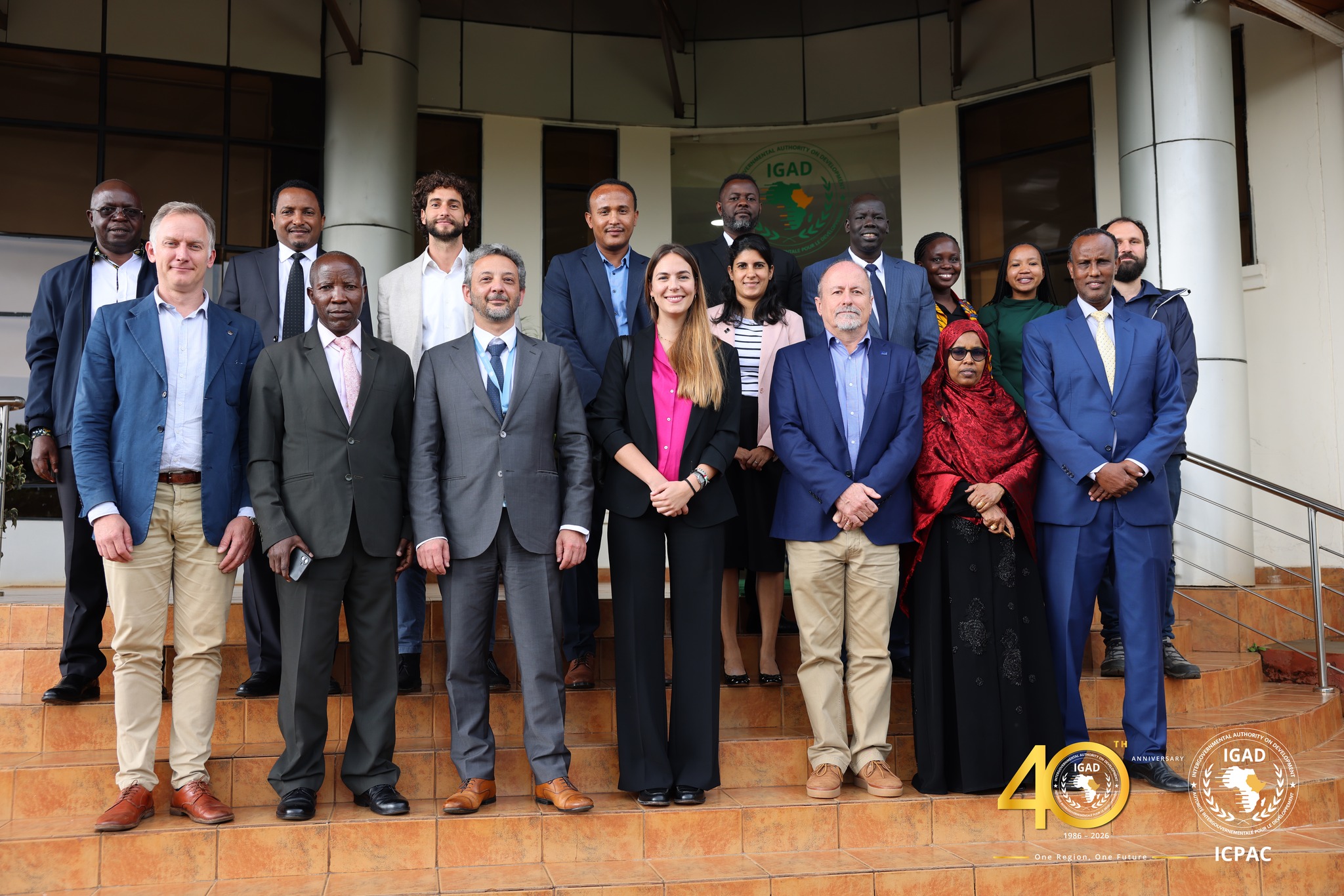
Held at IGAD headquarters in Nairobi, the engagement provided a platform for partners to review regional approaches to disaster risk management and strengthen collaboration on resilience-building, climate risk planning, and early action systems.
The meeting featured a high-level boardroom session with technical experts and stakeholders, followed by a guided tour of the IGAD Climate Prediction and Applications Centre (ICPAC) Disaster Operations Centre, where delegates were taken through the region’s evolving disaster monitoring and response systems.
During the visit, delegates received a live demonstration of the East Africa Hazards Watch platform, a regional monitoring and forecasting tool that supports timely preparedness, coordinated response, and evidence-based decision-making across Eastern Africa.
The platform provides real-time hazard tracking and climate risk analysis, enabling governments and humanitarian actors to anticipate threats, improve coordination, and act early in the face of climate and disaster risks.
Speaking during the engagement, ICPAC Director Dr Abdi Fidar said the region is increasingly shifting from reactive crisis response to more integrated, proactive resilience systems.
“At ICPAC, we are responding by shifting from early warning to early action and from fragmented interventions to integrated, systems-based approaches,” said Dr. Fidar.
He noted that the shift is aligned with global frameworks such as the Sendai Framework for Disaster Risk Reduction and the Early Warnings for All initiative while also responding to Eastern Africa’s urgent need for risk-informed development and resilience planning.
“This approach aligns with global commitments under the Sendai Framework and the Early Warnings for All initiative, while responding to the region’s growing need for risk-informed development and resilience planning,” he said.
The visit also highlighted the growing importance of data-driven forecasting and coordinated institutional response in addressing the increasing frequency and intensity of climate-related disasters across the region.
Luca Rossi, Deputy Chief of the UNDRR Regional Office for Africa, commended ICPAC’s role in strengthening regional decision-making through practical and scalable disaster response tools.
“ICPAC, through its Disaster Operations Centre, is providing critical tools for decision-making for the people that live in this region,” said Rossi.
“We’re building a sustainable ecosystem that, of course, empowers our own distribution.”
IGAD said the engagement offered an important opportunity to exchange experiences, deepen technical cooperation, and reinforce shared commitments to resilience-building in one of the world’s most climate-vulnerable regions.
The regional bloc continues to position disaster preparedness, anticipatory action, and climate resilience as central pillars of its development and humanitarian agenda, with stronger partnerships seen as critical to protecting lives, livelihoods, and economies across Eastern Africa.