
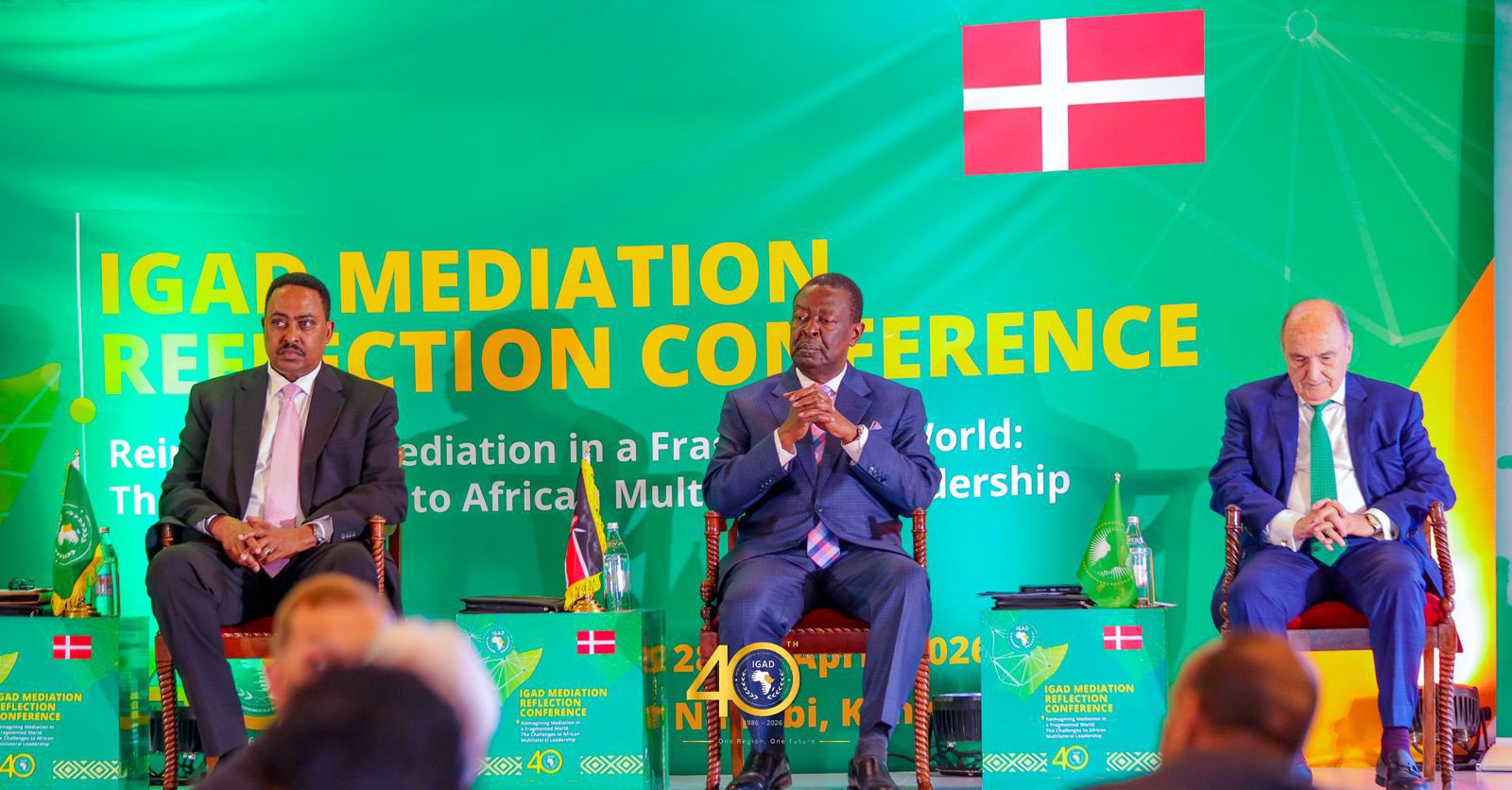
The Intergovernmental Authority on Development (IGAD) has called for stronger African leadership in mediation and peacebuilding as conflicts across the continent become increasingly complex, fragmented, and shaped by geopolitical competition.
Speaking at the first IGAD Mediation Reflection Conference in Nairobi, IGAD Executive Secretary Dr. Workneh Gebeyehu urged African institutions and leaders to rethink the future of mediation in a rapidly shifting global order, warning that the traditional foundations of peace mediation are under growing strain.
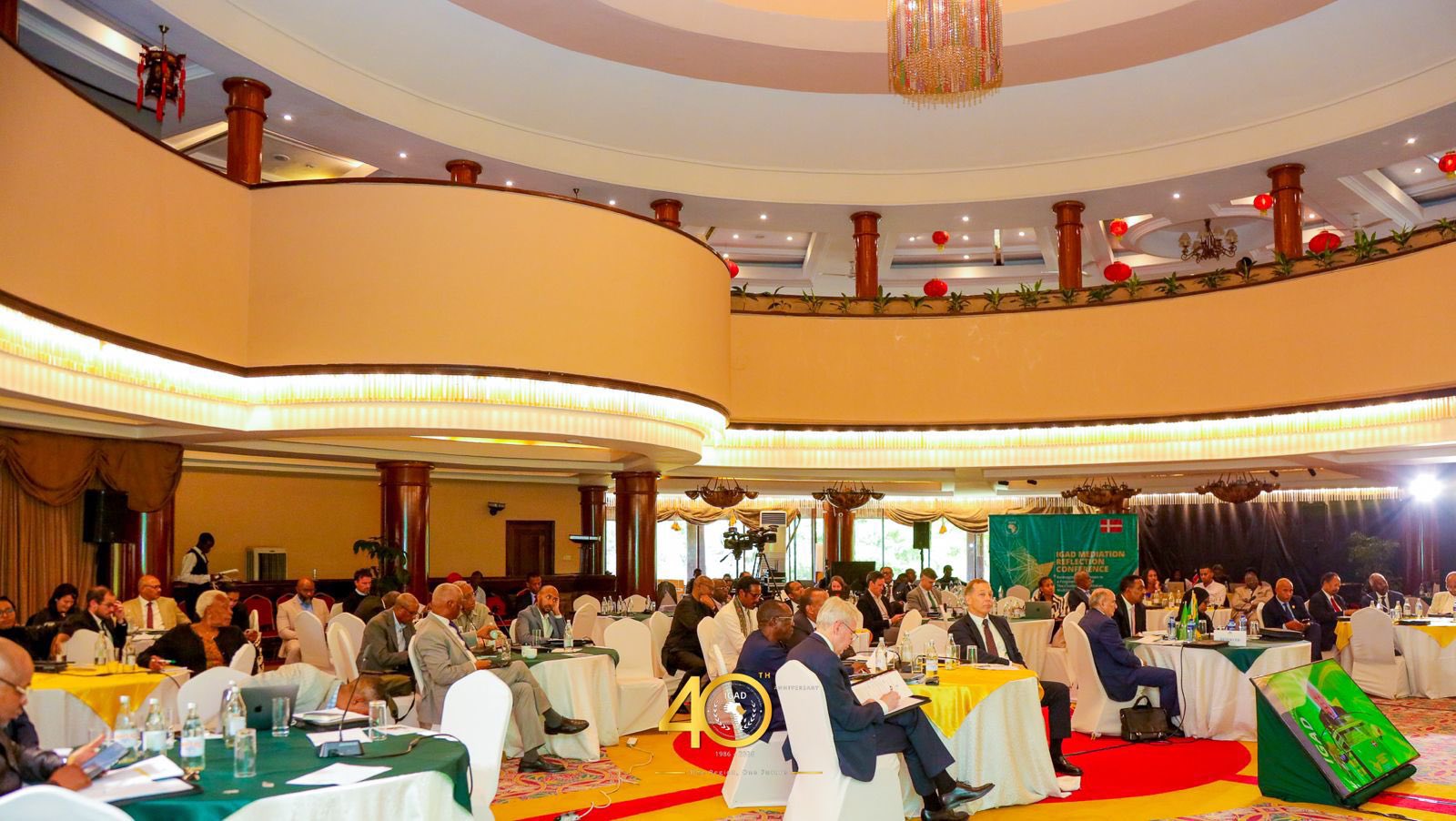
Held under the theme “Reimagining Mediation in a Fragmented World: The Challenge to African Multilateral Leadership,” the conference brought together regional leaders, diplomats, and peace partners to reflect on the evolving nature of conflict and the future of African-led mediation.
Dr. Workneh said the global environment that once enabled mediation, built on shared norms, functional multilateralism, and a minimum level of trust among states, is steadily eroding, making peace efforts more difficult and more urgent.
“We gather today at a moment of profound consequence, not only for our region, but for the very idea of peace mediation itself,” said Dr. Workneh.
“This is not an ordinary moment. And this is not an ordinary gathering.”
He said the world is no longer merely passing through a period of crisis, but is instead undergoing a deeper transformation in which mediation is no longer insulated from geopolitics, but increasingly shaped by it.
“The world that made mediation possible, anchored in shared norms, functioning multilateralism, and a minimum level of trust among states, is fragmenting before our eyes,” he said.
“We are not simply living through a period of crisis. We are living through a transformation.”
According to the IGAD chief, conflicts today are increasingly driven by fragmented authority, competing external interests, declining trust, and weakened multilateral coordination, making traditional mediation models less effective.
He warned that mediation is now unfolding in a more transactional environment, where short-term political bargains are increasingly replacing principled, consensus-driven peace processes.
“The space for principled, consensus-based engagement is narrowing, while short-term deal-making is gaining ground,” he said.
“And yet, precisely because of this, mediation has never been more necessary.”
Dr. Workneh underscored that mediation remains central to IGAD’s mandate and credibility, describing it as the region’s most visible political responsibility.
“For IGAD, mediation is not optional. It is our most visible political responsibility,” he said.
“Our people do not measure us by what we promise; they measure us by what we prevent. By the wars that do not happen. By the conflicts that do not escalate. And by the peace that becomes possible.”
He said mediation is where the credibility of multilateral institutions is tested.
He warned that the Horn of Africa is facing not isolated crises but an interconnected, regionalised system of conflict deeply entangled with external dynamics.
“The Horn of Africa stands at a dangerous crossroads,” he said.
“What we are witnessing is not a series of isolated crises but the emergence of a system.”
He noted that today’s wars are increasingly prolonged, fragmented, and sustained by war economies, raising urgent questions about how mediation can function in conflicts where there is no longer a single centre of authority to negotiate with.
“There is no longer a single center to negotiate with,” he said.
“What does mediation look like in a world without a center?”
Dr. Workneh acknowledged IGAD’s long-standing mediation record in the region, noting that past successes were anchored in legitimacy, political clarity, and coordinated regional action.
However, he said the current moment demands greater honesty, sharper political strategy, and stronger institutional coherence.
“Mediation today is under strain,” he said.
“Too often, it risks becoming crisis management rather than conflict resolution.”
He emphasised that mediation must be understood not as a technical exercise, but as a deeply political process rooted in power, legitimacy, and the pursuit of a shared future.
“Mediation is not technical. It is political. It is about power. It is about legitimacy. And ultimately, it is about building a shared future,” he said.
Dr. Workneh also pointed to Sudan as a stark example of the limits of fragmented mediation, saying that despite sustained diplomatic efforts, the war has continued unchecked and exposed the weaknesses of existing peace mechanisms.
“Three years into a devastating war, mediation has not stopped the carnage,” he said.
“This is failure. And it must be acknowledged.”
He warned that Sudan is rapidly becoming the clearest test of whether mediation can still deliver credible outcomes in modern conflict.
“Sudan is fast becoming the epicenter of a deeper crisis, the erosion of mediation itself,” he said.
“If mediation cannot make a difference in Sudan, its credibility everywhere is at risk.”
Dr. Workneh called for a renewed mediation framework that is unified, politically anchored, strategically coherent, and centred on the people most affected by conflict.
He urged African institutions to reclaim mediation as a political strategy, restore multilateral coherence, and move beyond managing conflict toward resolving it.
“What the Horn of Africa requires is not management, but resolution,” he said.
“It requires political courage. And strategic clarity.”
The IGAD Executive Secretary also expressed appreciation to Kenya for hosting the conference and recognised the country’s longstanding role in supporting peace and mediation efforts across the Horn of Africa.
He thanked President William Ruto, the Government of Kenya, and the Kenyan people for their continued support of regional peace and acknowledged the role of Prime Cabinet Secretary and Cabinet Secretary for Foreign and Diaspora Affairs Musalia Mudavadi in advancing diplomacy and peaceful conflict resolution.
As the conference opened in Nairobi, IGAD leaders said the gathering marks the beginning of a renewed regional commitment to strengthening African-led mediation and repositioning peacebuilding as a central pillar of regional stability in an increasingly fractured world.