
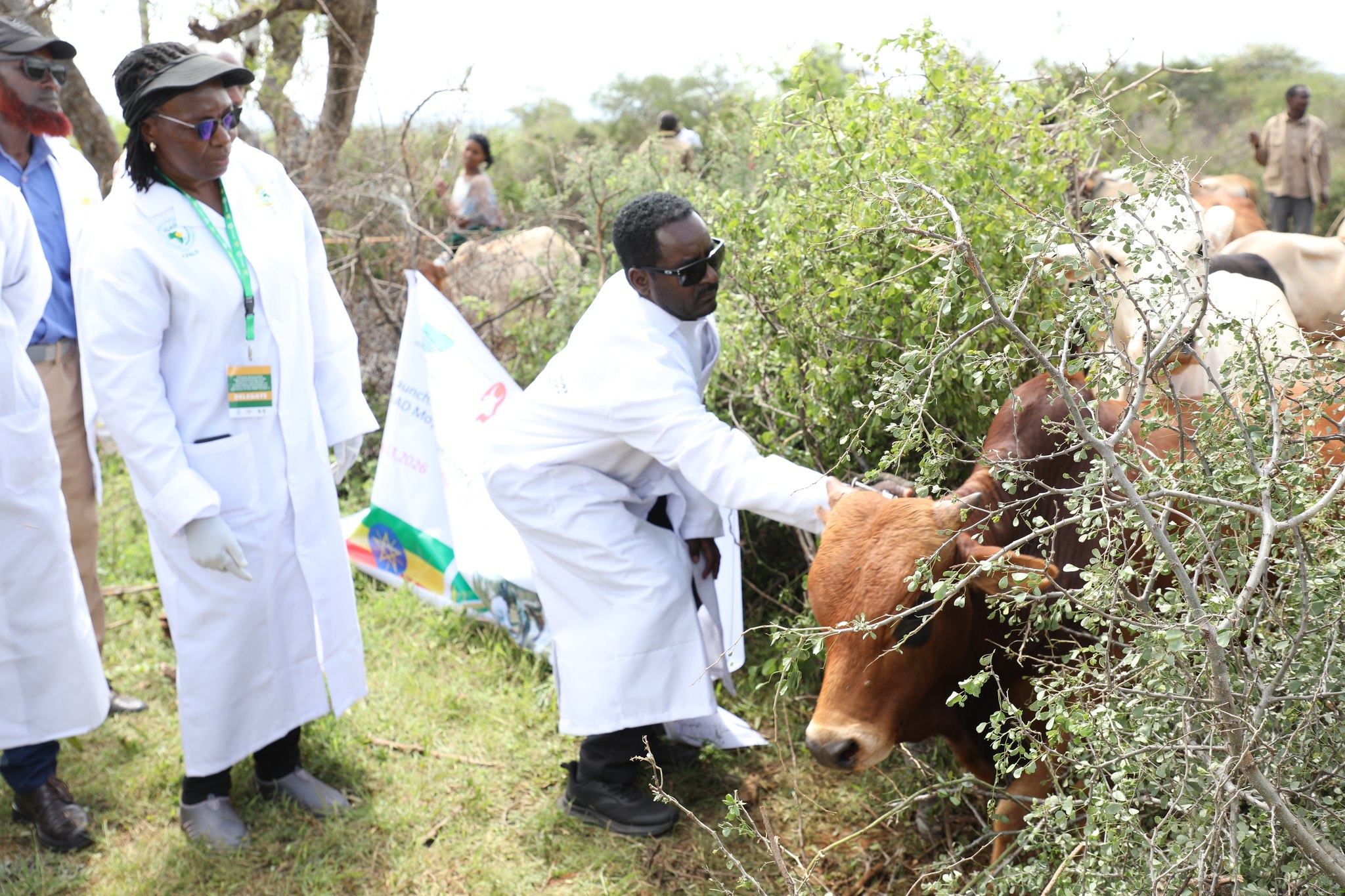
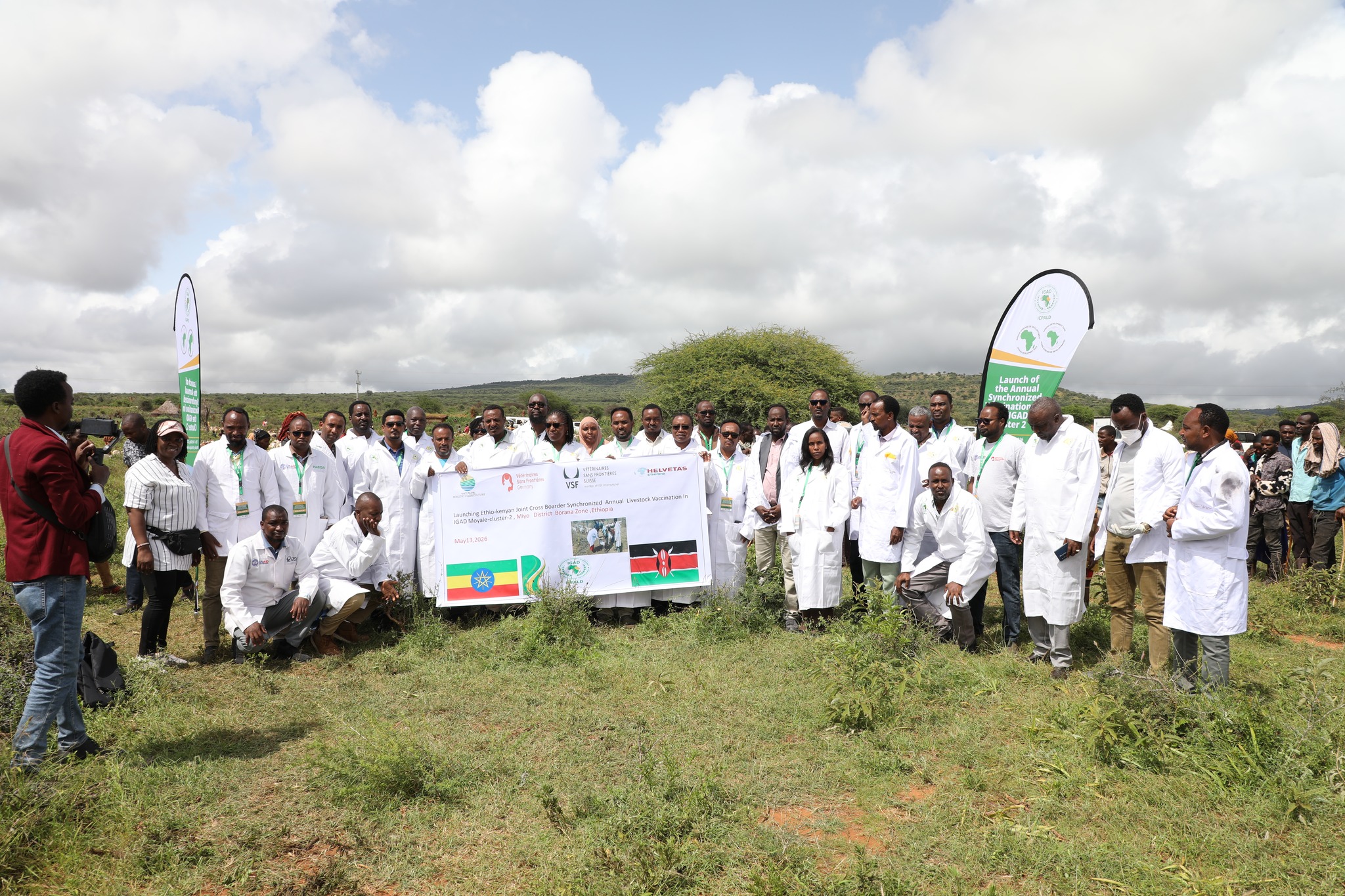
The IGAD Centre for Pastoral Areas and Livestock Development (ICPALD) has launched a synchronised cross-border livestock vaccination programme along the Kenya-Ethiopia border, marking a major step in the fight against priority transboundary animal diseases
The launch took place in Ilamu and Boku Luboma Kebeles in Miyo District, Borana Zone, Ethiopia, where the first phase of the campaign is targeting 300,000 livestock.
The exercise focuses on priority transboundary animal diseases, including Peste des Petits Ruminants (PPR), which remains a major threat to small ruminants and pastoral livelihoods in the region.
The vaccination campaign is part of an extended cross-border exercise aimed at vaccinating a total of 5 million livestock by the end of June 2026.
The livestock targeted include camels, cattle, goats and sheep in districts bordering Kenya.
The campaign will cover Miyo, Moyale, Dhire, Dillo and Teltele districts, areas that are central to pastoral production and cross-border livestock movement.
By synchronising vaccination activities across border areas, the programme seeks to reduce disease transmission, protect animal health and strengthen regional disease control efforts.
ICPALD said the initiative is designed to support pastoral communities whose livelihoods depend heavily on livestock.
In borderland areas, animal diseases can spread quickly due to seasonal migration, trade and shared grazing and watering points. Coordinated vaccination is therefore critical in protecting herds and improving food and nutrition security.
The launch also reflects IGAD’s broader commitment to strengthening resilience among pastoral and agro-pastoral communities in the Horn of Africa. Through regional coordination, ICPALD continues to support member states in addressing livestock health challenges that affect productivity, trade and household incomes.
The vaccination programme is funded by the African Development Bank (AfDB) under the Building Resilience to Food and Nutrition Security (BREFONS) project.
The project supports interventions to improve resilience, food security, and nutrition among vulnerable communities in drought-prone areas.
Officials noted that the campaign will help safeguard livestock assets, enhance disease surveillance, and promote safer cross-border livestock movement.
It is also expected to support national and regional efforts to control and eventually eradicate PPR and other priority transboundary animal diseases.
As the campaign expands to additional districts along the Kenya-Ethiopia border, ICPALD and partners are expected to work closely with local authorities, veterinary teams and pastoral communities to ensure broad coverage and effective implementation.
The programme comes at a critical time when pastoral communities continue to face recurring climate shocks, livestock disease risks and pressure on grazing resources.
By targeting millions of animals, the campaign is expected to strengthen livestock-based livelihoods and contribute to long-term resilience in borderland communities.