
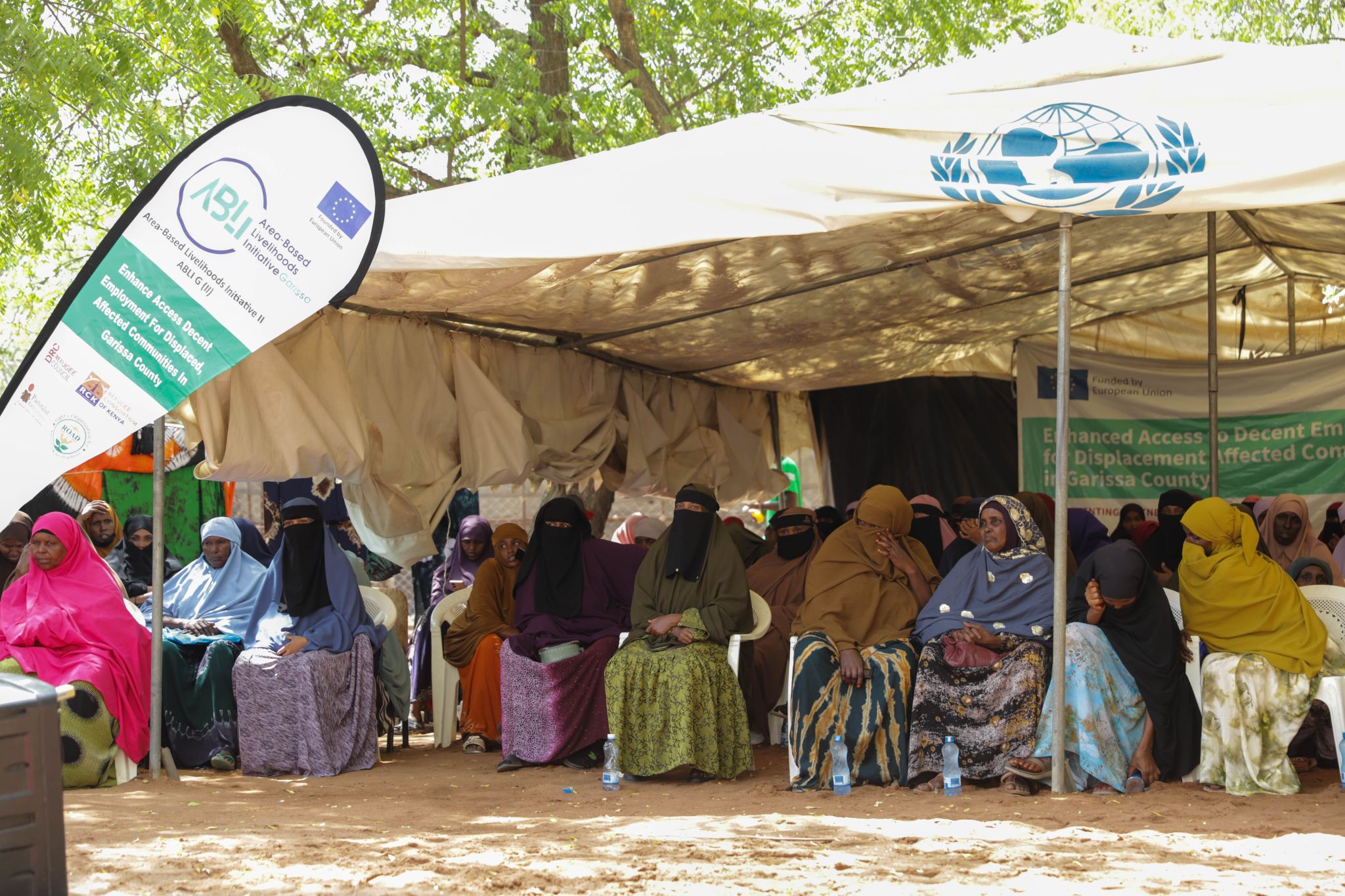
The Pastoralist Group Initiative has held a vibrant Technical and Vocational Education and Training (TVET) graduation ceremony and distributed start-up kits under the ABLI G II (Area-Based Livelihood Initiative – Phase II) Project in Hagadera.
The initiative marks a significant step toward strengthening livelihoods among refugees and host communities.
As explained by the Pastoralists Girls Initiative, the event celebrated more than 130 graduates who completed vocational skills training across five key disciplines.
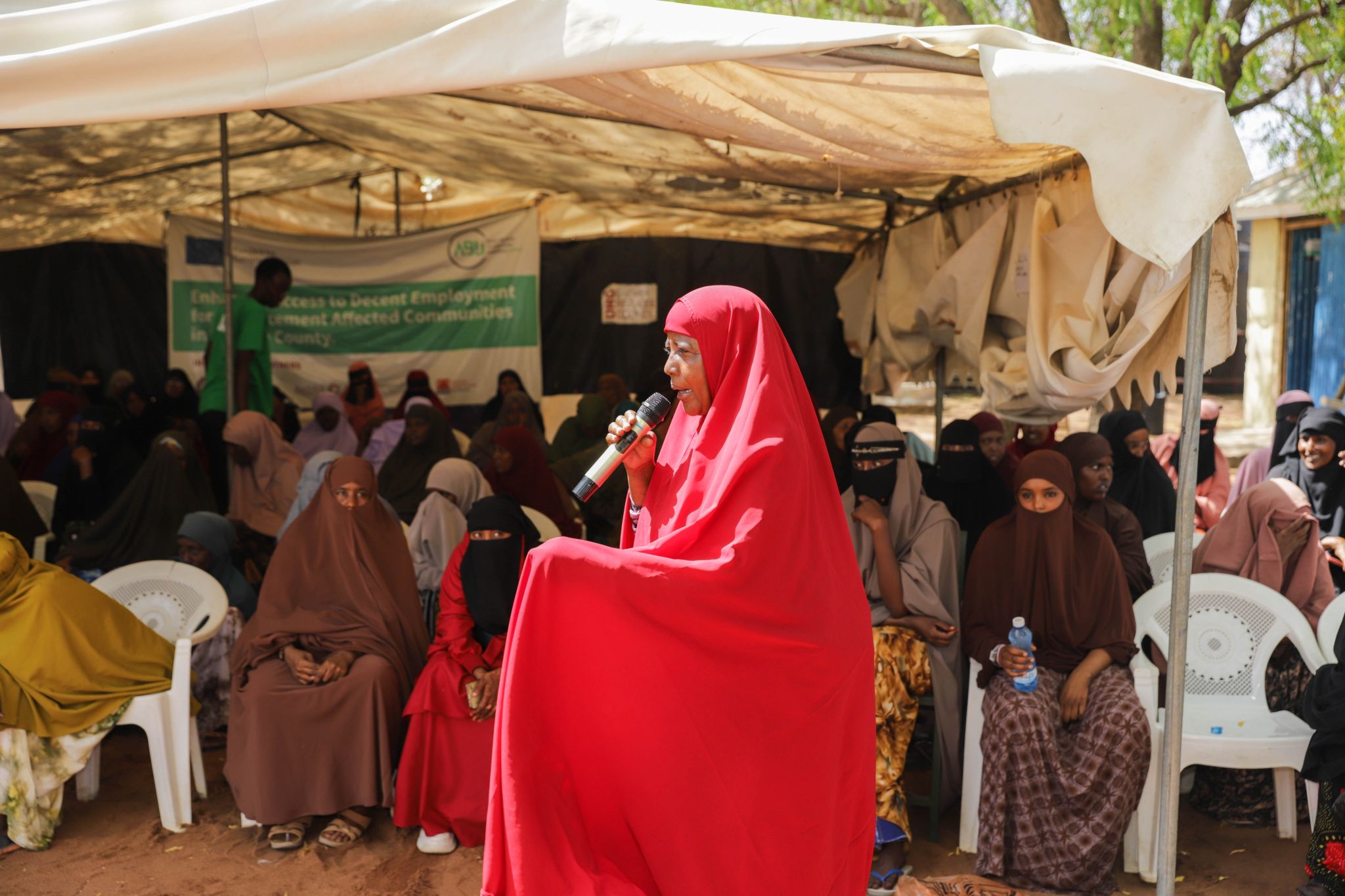
The largest cohort comprised 62 trainees in tailoring and dressmaking, followed by 45 in tie and dye, 17 in ICT, six in salon and beauty therapy, and three in electrical and solar installation.
Organisers described the ceremony as a milestone in promoting self-reliance and economic empowerment in Fafi Sub-County.
Graduates were presented with start-up kits aligned to their respective fields, enabling them to immediately translate their newly acquired skills into income-generating ventures.
The ABLI G II Project is funded by the European Union and implemented by a consortium led by DRC Kenya in partnership with the Refugee Consortium of Kenya, Rural Agency for Community Development and Assistance (ROAD), and the Regional Durable Solutions Secretariat (ReDSS).
Through targeted vocational training and business start-up support, the initiative seeks to enhance resilience, reduce dependency on humanitarian aid, and foster inclusive development within refugee-hosting areas.
By equipping both refugees and members of the host community with practical skills, the program is helping bridge economic gaps and strengthen social cohesion.
Project partners noted that investing in vocational education is central to building sustainable livelihoods in marginalised and arid regions.
The training equips beneficiaries with market-relevant skills that respond to local demand, particularly in tailoring, renewable energy installation, beauty services, and digital literacy.
As graduates embark on their entrepreneurial journeys, stakeholders expressed optimism that the initiative will contribute to long-term economic stability and dignity for communities in Hagadera and beyond.
The ceremony concluded with renewed commitment from partners to continue supporting skills development and resilience-building efforts under the ABLI G II framework, an investment, organisers said, not just in livelihoods, but in brighter futures for all.