
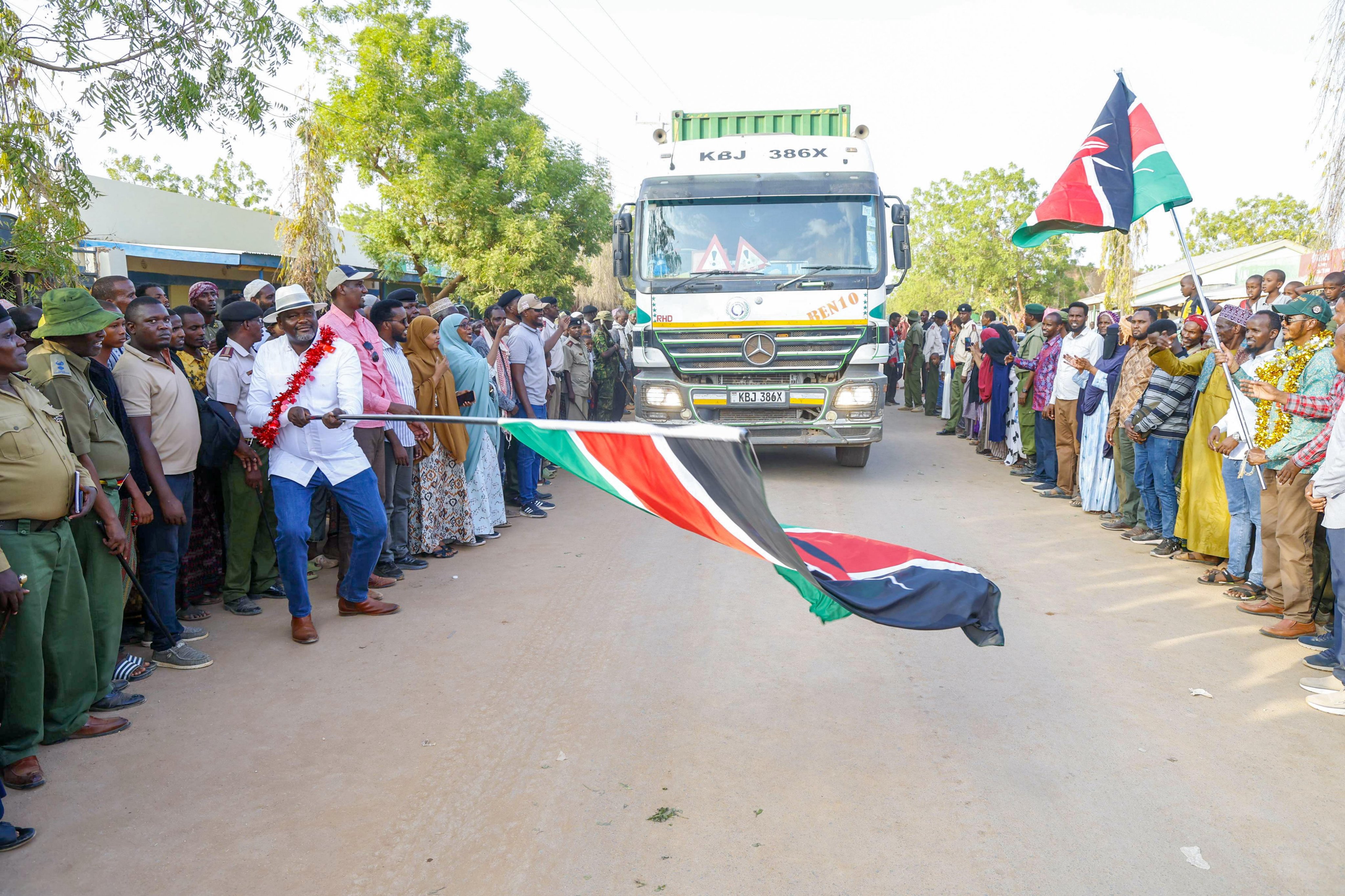
The government has intensified its drought response in northern Kenya, flagging off emergency relief supplies in Eldas Constituency, Wajir County, to support families facing acute food and nutrition shortages caused by prolonged dry conditions.
Cabinet Secretary for Public Service, Human Capital Development, and Special Programmes Geoffrey Ruku said the intervention is part of a broader national effort to ensure that vulnerable Kenyans receive timely humanitarian assistance as the drought continues to strain livelihoods across the Arid and Semi-Arid Lands.
“We're on the ground to ensure Kenyans affected by the biting drought access food and nutrition supplements,” Ruku said during the flag-off of the relief consignment.

He emphasised the government’s commitment to preventing hunger-related deaths, noting that sufficient food reserves are available to support affected populations while partnerships are being strengthened to sustain the response.
“No Kenyan should die because of hunger. The government has sufficient food stocks to distribute to all Kenyans in need. We're working with humanitarian partners and friends to reinforce our strategic food reserves,” he said.
Ruku confirmed that the Eldas exercise marks a key step in scaling up the distribution of essential supplies to drought-hit households in Wajir and neighbouring regions.
“Today I was in Eldas Constituency, Wajir County, to flag off emergency relief supplies to go to families in need in the region,” he said.
Beyond food assistance, the Ministry, through the State Department for Special Programmes, is coordinating a multi-agency response aimed at protecting both lives and livelihoods.
The intervention involves collaboration with elected leaders, community representatives, regional water agencies, the National Drought Management Authority (NDMA), and the National Government Administration Officers (NGAO) to identify affected individuals, households, and livestock.
“The Ministry through the State Department for Special Programmes is also working with elected and community leaders, relevant agencies such as regional water agencies, the National Drought Management Authority and the National Government Administration Officers to identify affected individuals, families and livestock affected and to deliver food, water, fodder and other necessities to buttress communities from the adverse effects of drought,” Ruku added.
Northern Kenya has faced recurring drought cycles linked to erratic rainfall and climate variability, with Wajir among the counties experiencing heightened food insecurity, water scarcity, and livestock losses.
Authorities say sustained humanitarian support, strengthened coordination, and investment in resilience measures remain critical to cushioning vulnerable communities.