
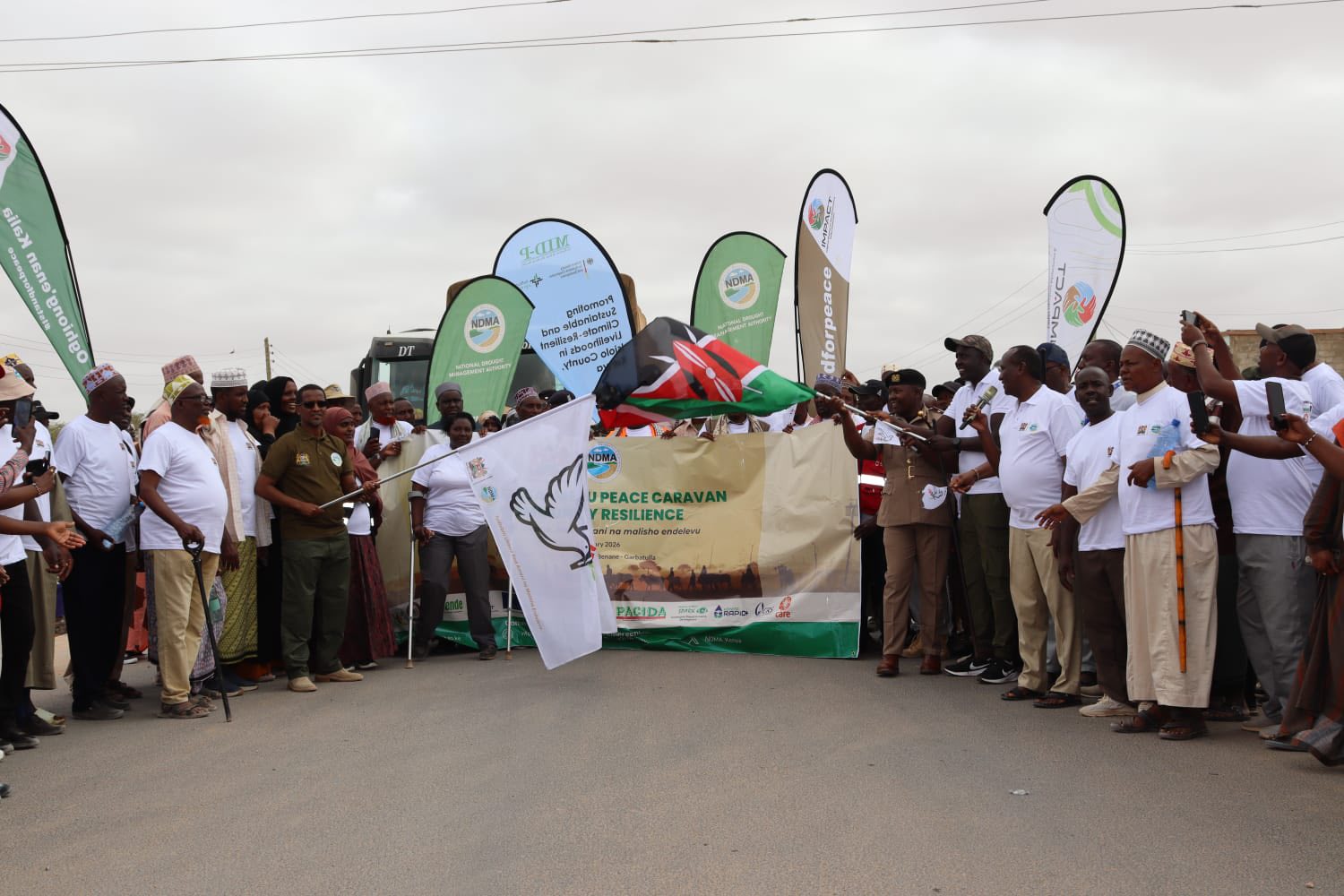
Communities along the Garissa–Isiolo–Meru corridor have renewed their commitment to peaceful coexistence and shared management of scarce resources following the launch of a peace caravan spearheaded by the National Drought Management Authority (NDMA).
As the first day of the caravan concluded, organisers and participants reflected on a strong start anchored in dialogue, cooperation, and negotiated sharing of water and pasture, critical lifelines for communities grappling with prolonged drought.
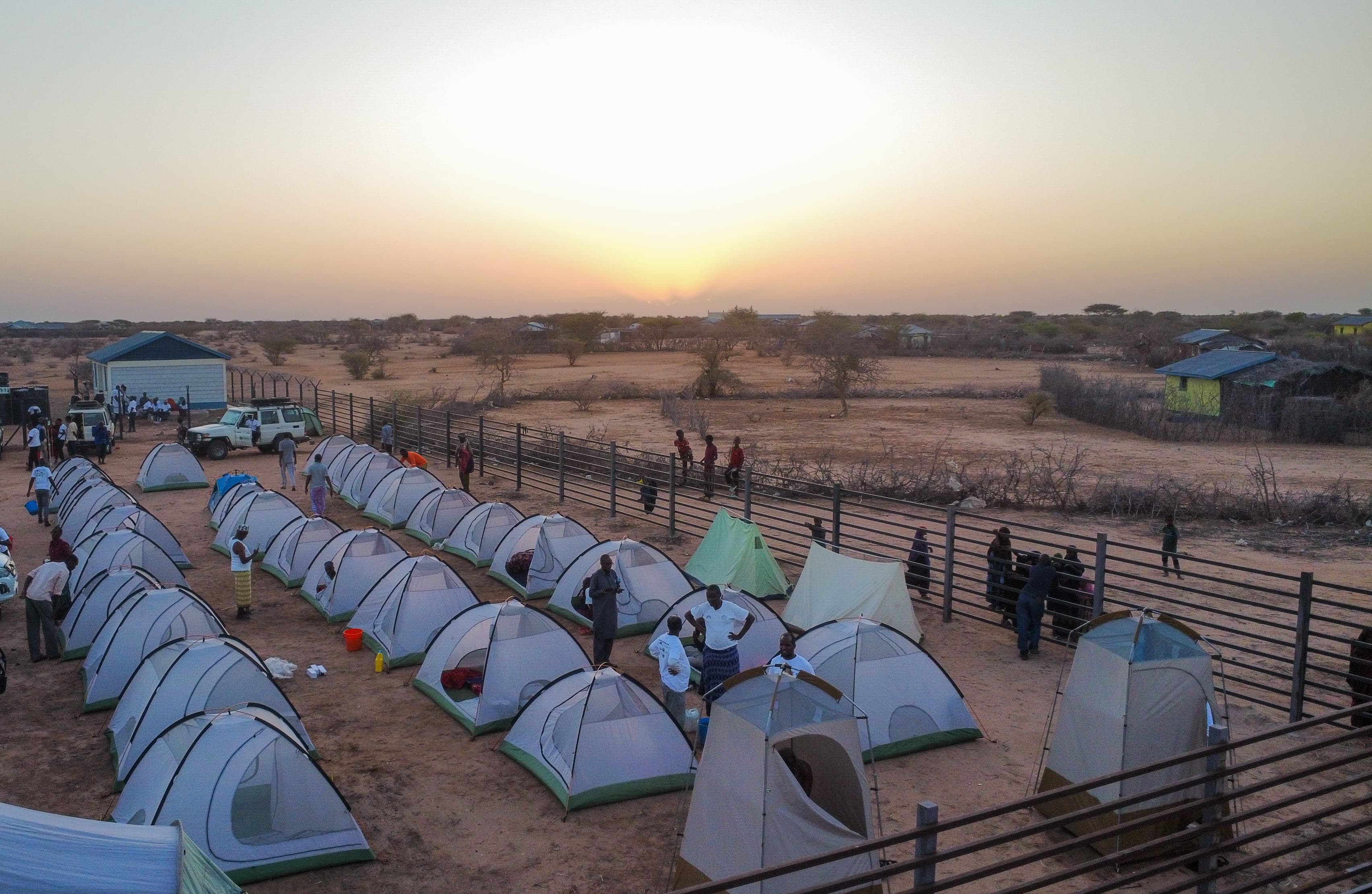
The caravan covered the stretch from Modogashe to Barquqe, with participants walking under intense heat but united by a common purpose.
Community members, peace and grazing committees, youth and women leaders, county teams, security agencies, and development partners took part, demonstrating broad-based support for locally driven peacebuilding efforts.
NDMA Board Vice Chairman Gilbert Tenai and Chief Executive Officer Hared Hassan led from the front, symbolising institutional commitment to resolving resource-based tensions through inclusive and participatory approaches.
Observers noted a strong sense of resilience among participants, marked by determination, unity of purpose, and a shared resolve to address conflict drivers linked to drought, competition over grazing land, and access to water.
The peace caravan is part of NDMA’s broader strategy to promote negotiated resource sharing and prevent conflict in drought-prone regions by strengthening dialogue at the community level.
Organisers say the initiative also helps rebuild trust between neighbouring communities whose livelihoods depend on pastoralism and mobility.
After a well-deserved rest at the caravan camp, participants are expected to resume the walk towards Eldere Centre, continuing conversations aimed at fostering lasting peace and cooperation across the corridor.
NDMA has reiterated that sustained community engagement, inclusive leadership, and coordinated action remain essential to building resilience and stability in Kenya’s arid and semi-arid regions as climate pressures intensify.