
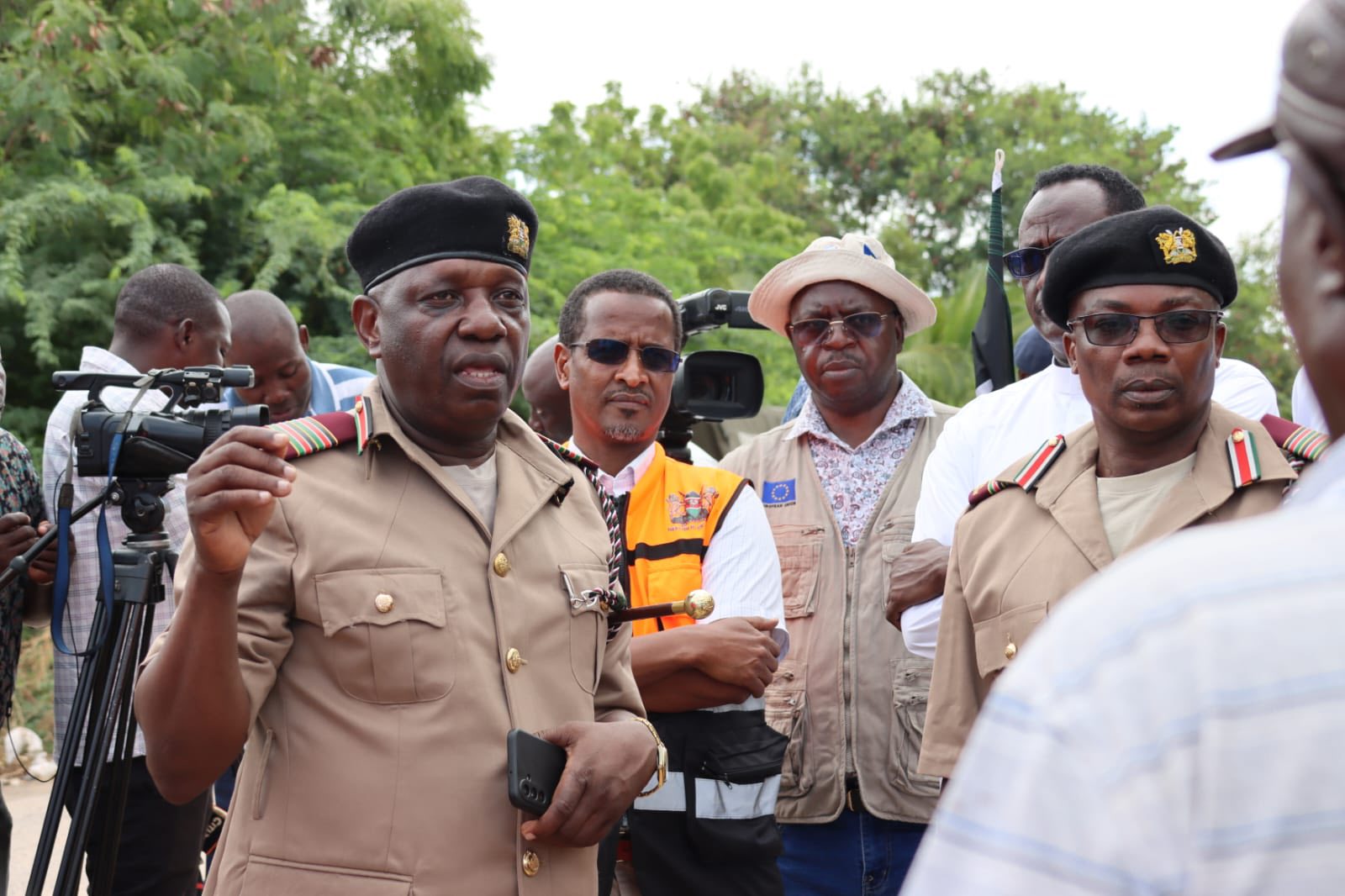
The National Government has today flagged off food relief distribution and water trucking operations in Garissa County as part of an expanded response to persistent drought conditions affecting households, livestock, and water systems.
The intervention follows the poor performance of the October–December 2025 short rains, which were characterised by late onset, uneven distribution, and early cessation. These factors have significantly constrained water availability and pasture regeneration across the county.
According to the National Drought Management Authority (NDMA), Garissa County remains in the Alert drought phase. Rainfall recorded between October 2025 and January 2026 stood at 31.73 millimetres, representing a 77 per cent deficit compared to the long-term average. The rainfall shortfall has led to drying of shallow wells, limited pasture recovery, and increased pressure on a small number of functional boreholes.
Average household water trekking distances have risen to 10.5 kilometres, with women and girls disproportionately affected. Several boreholes are now operating continuously, raising concerns over mechanical strain and the risk of system failure.
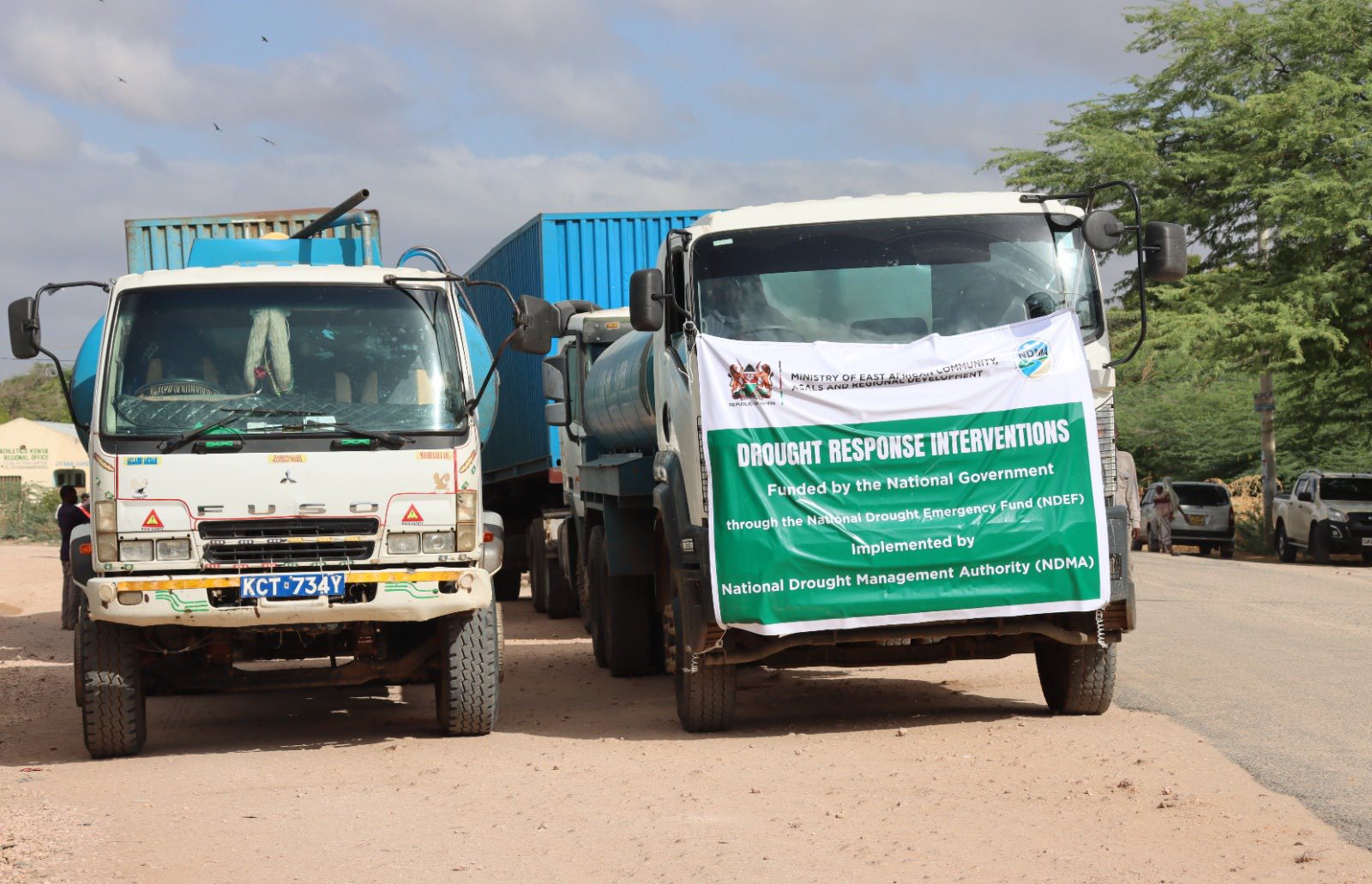
To stabilise access to water, NDMA is supporting targeted water trucking in Lagdera and Balambala sub-counties, prioritising vulnerable households as well as schools and health facilities. Similar water interventions and borehole rehabilitation efforts are ongoing in other high-risk counties, including Mandera and Wajir.
The relief operation was officially flagged off today by the NDMA Chief Executive Officer, Hared Hassan Adan, together with the Garissa County Commissioner, as part of a broader national drought response scale-up.
The current consignment comprises 4,480 bags of rice and beans, aimed at households facing acute food shortages. NDMA estimates that approximately 185,400 people in Garissa County currently require humanitarian assistance through food or cash-based support.
Cash transfers remain a key component of the drought response. Last week, the government disbursed KSh 870.38 million through NDMA to 132,780 vulnerable households across eight arid counties. In Garissa County, 9,222 households benefited from the cash assistance to meet immediate food and basic needs.
Meanwhile, NDMA is coordinating a Food and Nutrition Security Assessment across 23 arid and semi-arid counties to update needs estimates and guide the prioritisation of response resources.
Officials caution that the January–March 2026 dry season presents a limited window for effective intervention. With water and pasture resources already under strain, sustained and coordinated action will be critical to prevent further deterioration of conditions in Garissa and other drought-affected areas.