
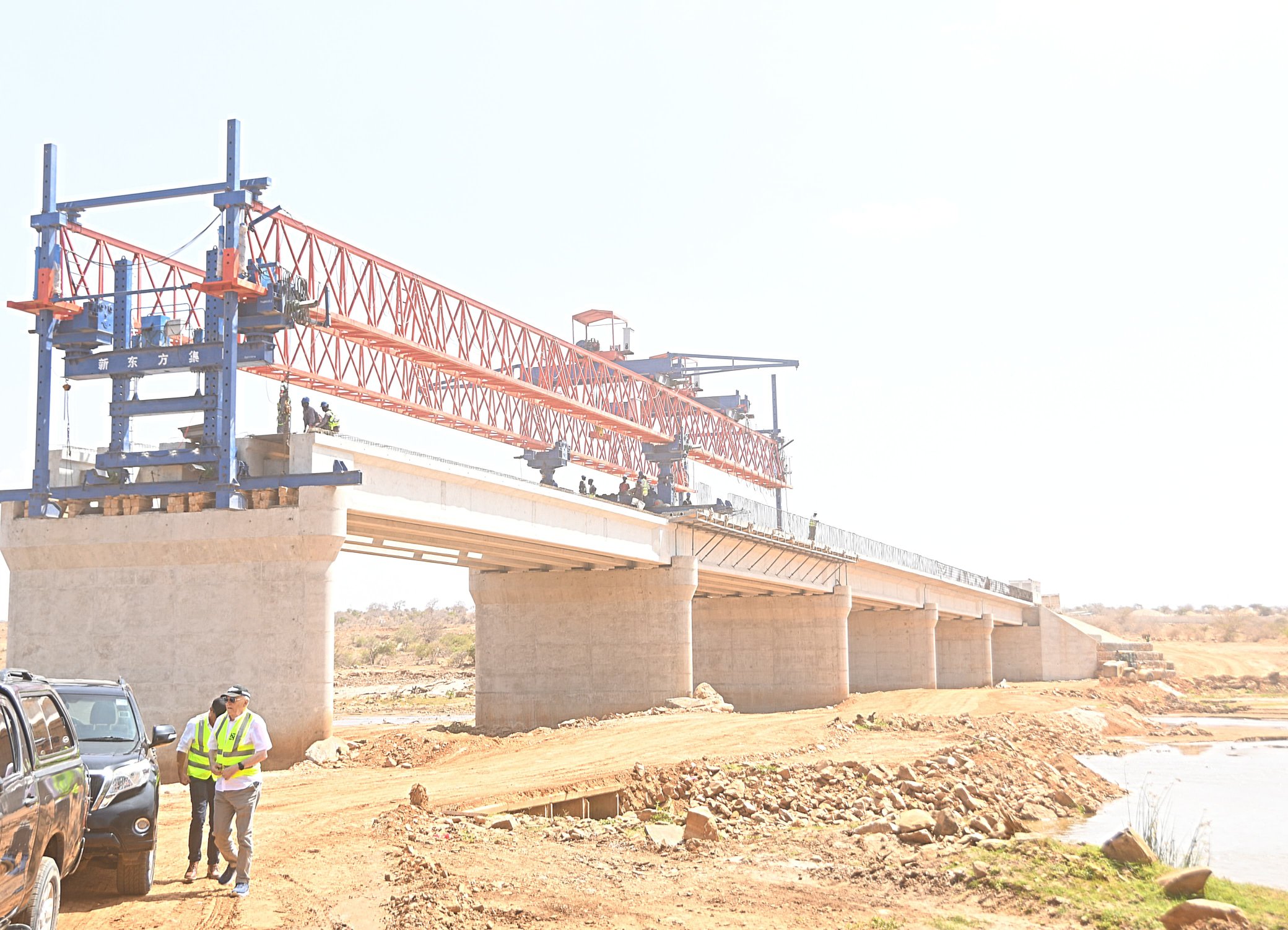
The government has intensified efforts to accelerate the Galana Kulalu Food Security Project, with plans to unlock at least 200,000 acres for full agricultural production once the proposed Galana Dam and supporting irrigation infrastructure are completed.
Principal Secretary for Irrigation Ephantus Kimotho said that recent inspections of key infrastructure highlight steady progress toward transforming the coastal irrigation scheme into a cornerstone of Kenya’s long-term food security strategy.
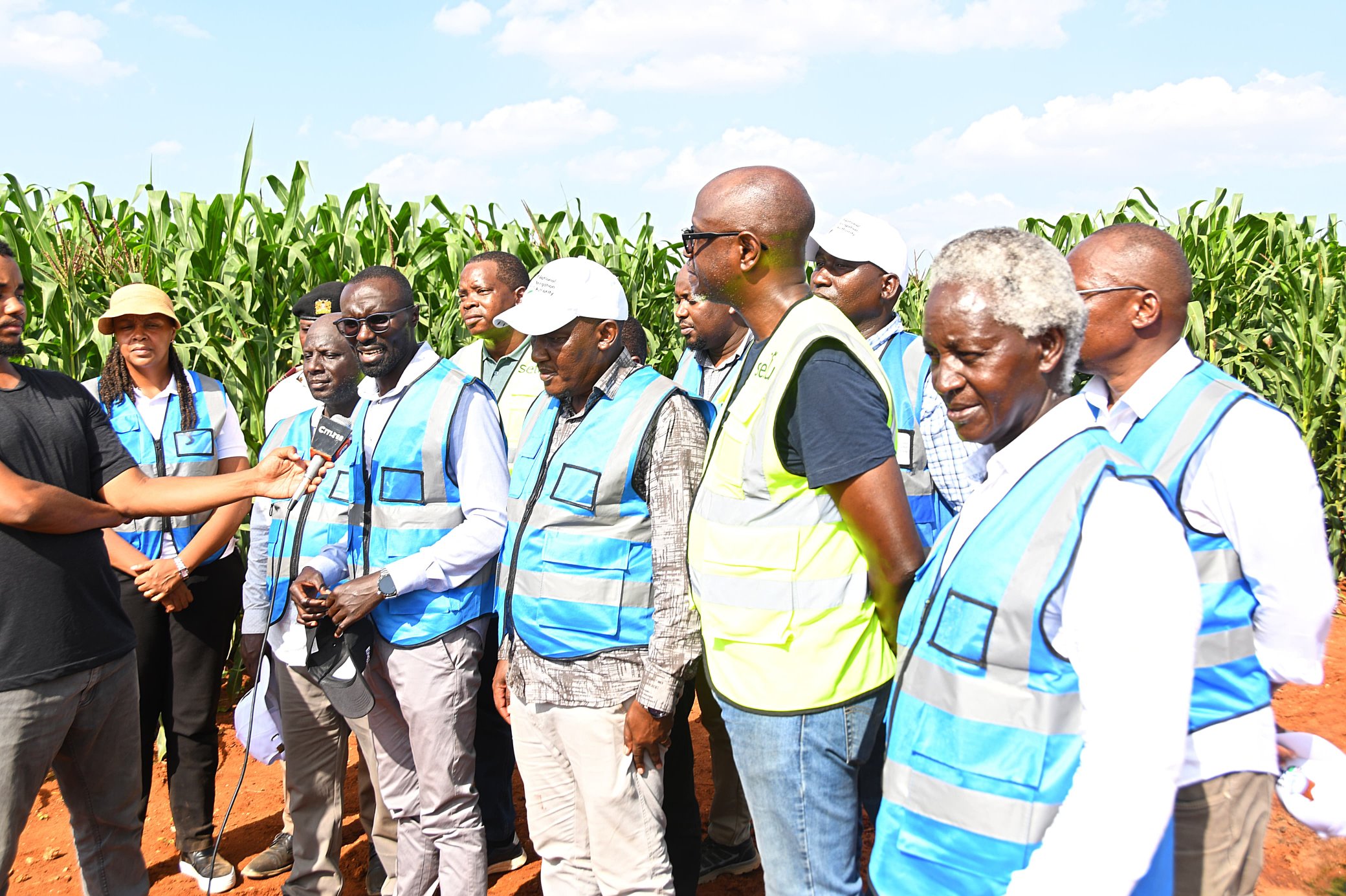
“We have today inspected the Galana Bridge, a key link for the movement of farm inputs and harvested produce for the Galana Kulalu Food Security Project as part of efforts to strengthen national food security,” Kimotho said.
He noted that complementary energy investments are also advancing following a recent inspection by Energy Principal Secretary Alex Wachira of the Weru 220/66 kV substation, the 66 kV transmission line to Galana Kulalu, and the 66/33 kV step-down substation, where pole erection has already been completed.
According to Kimotho, the power infrastructure will replace expensive diesel-powered generation currently used in farm operations, significantly lowering production costs and encouraging private investors who are already scaling cultivation.
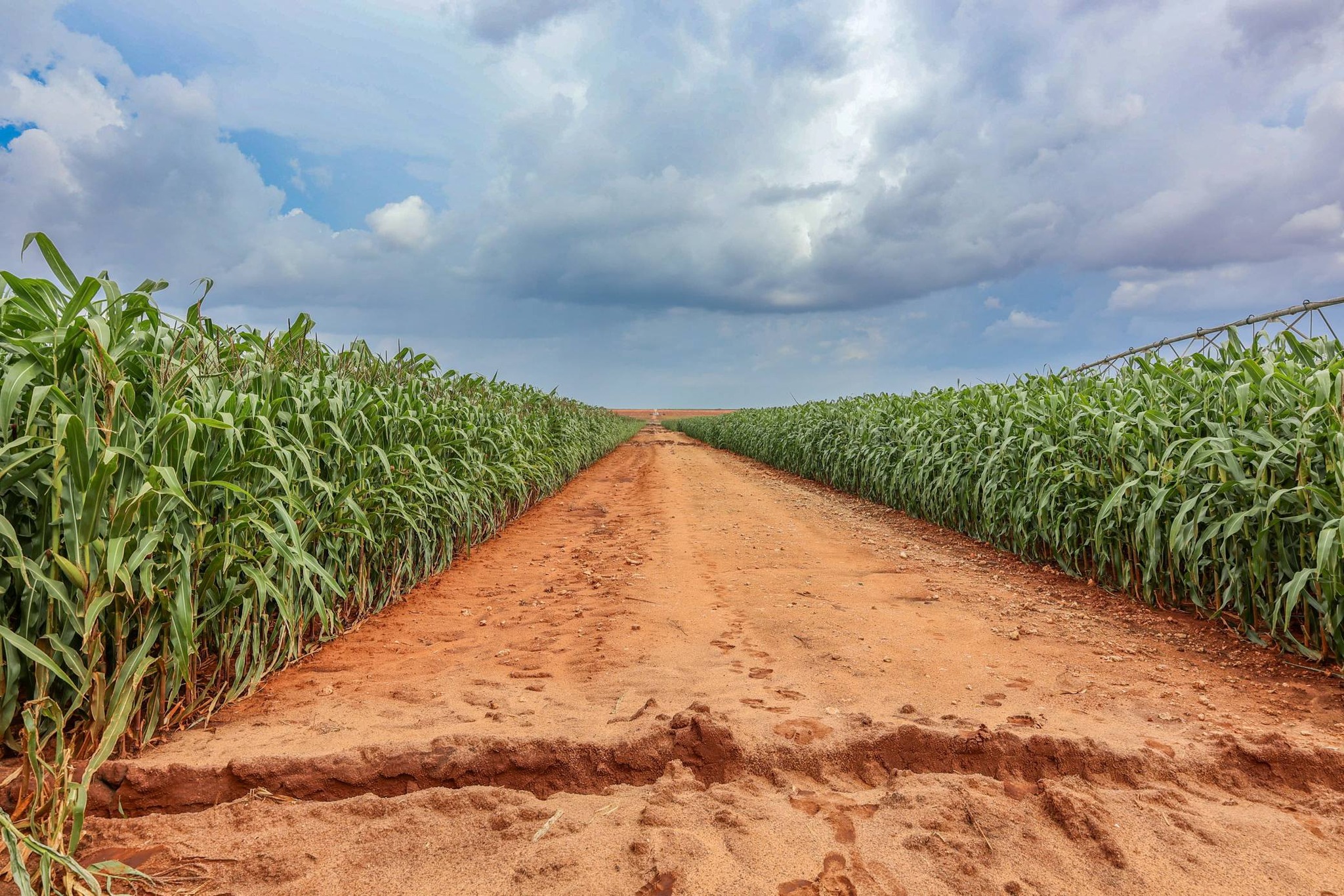
“This infrastructure will replace costly diesel generators and significantly reduce production costs for private investors who are scaling production in 20,000 acres, equivalent to 1.2 million bags of maize per double season,” he said.
At the centre of the expansion plan is the Galana Dam, which is expected to significantly improve water availability and enable large-scale irrigation across the project area.
“The planned Galana Dam will significantly enhance water availability and support irrigation expansion. Following the signing of the dam construction agreement, the government aims to place at least 200,000 acres under full production,” Kimotho added.
Private sector participation continues to grow, with cultivated acreage projected to rise from the current 2,000 acres to more than 5,400 acres by May, signalling renewed confidence in the viability of the irrigation scheme.
Beyond the dam itself, authorities are planning a 60-kilometre canal network to address longstanding water distribution challenges within the project area.
At the same time, feasibility studies are underway to better understand soil characteristics across the remaining 180,000 acres, a step seen as critical for guiding crop selection, irrigation planning, and long-term productivity.
The renewed push at Galana Kulalu forms part of broader national efforts to strengthen domestic food production, reduce reliance on imports, and cushion the country against climate-driven supply shocks.
Once fully operational, the expanded irrigation scheme is expected to play a major role in stabilising Kenya’s grain supply, lowering production costs through modern energy infrastructure, and positioning Galana Kulalu as a flagship model for large-scale, climate-resilient agriculture.