
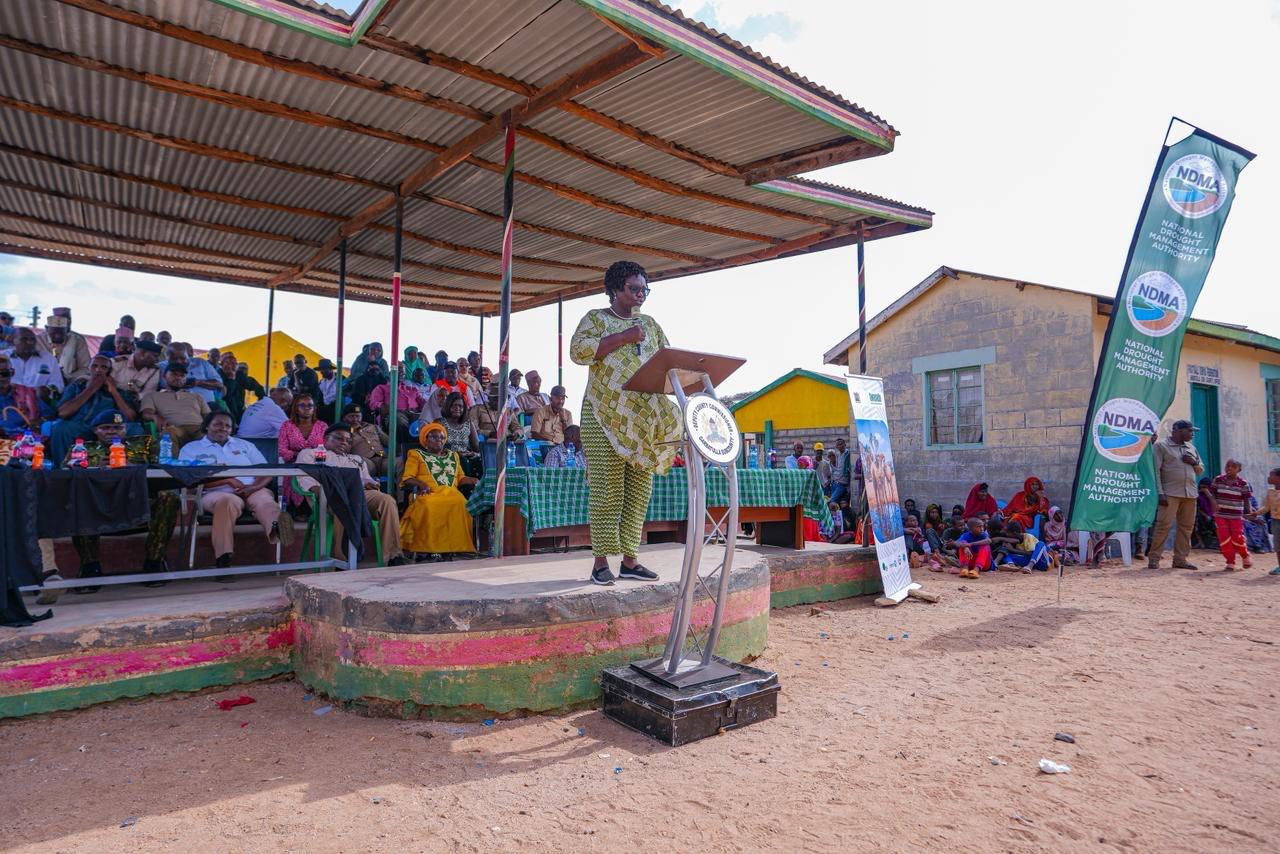
The government, in partnership with the National Drought Management Authority (NDMA), has concluded a four-day peace caravan aimed at reducing drought-related conflicts along the borders of Garissa, Isiolo and Meru counties.
Speaking during the closing ceremony in Garbatulla, Cabinet Secretary for the Ministry of EAC, ASALs and Regional Development Beatrice Askul Moe warned that prolonged drought has disrupted traditional pastoralist migration patterns, intensifying competition over scarce water and pasture resources.
“Drought has forced pastoralists to move away from their traditional grazing areas, resulting in conflicts arising out of intensified competition over water and pasture,” she said.
Askul noted that the peace caravan was designed to promote dialogue and cooperation among affected communities.
“Today, I officiated the closing ceremony of a four-day peace caravan, organised by the National Drought Management Authority (NDMA) along the borders of Garissa, Isiolo and Meru counties in an effort to reduce drought-related community conflicts,” she added.
The initiative brought together a broad coalition of stakeholders, including community elders, youth and women representatives, peace and grazing committees, national and county government officials, civil society organisations and development partners.
Activities conducted during the caravan included peace walks, community dialogue forums on drought and resource sharing, and sports events intended to foster harmony among neighbouring communities.
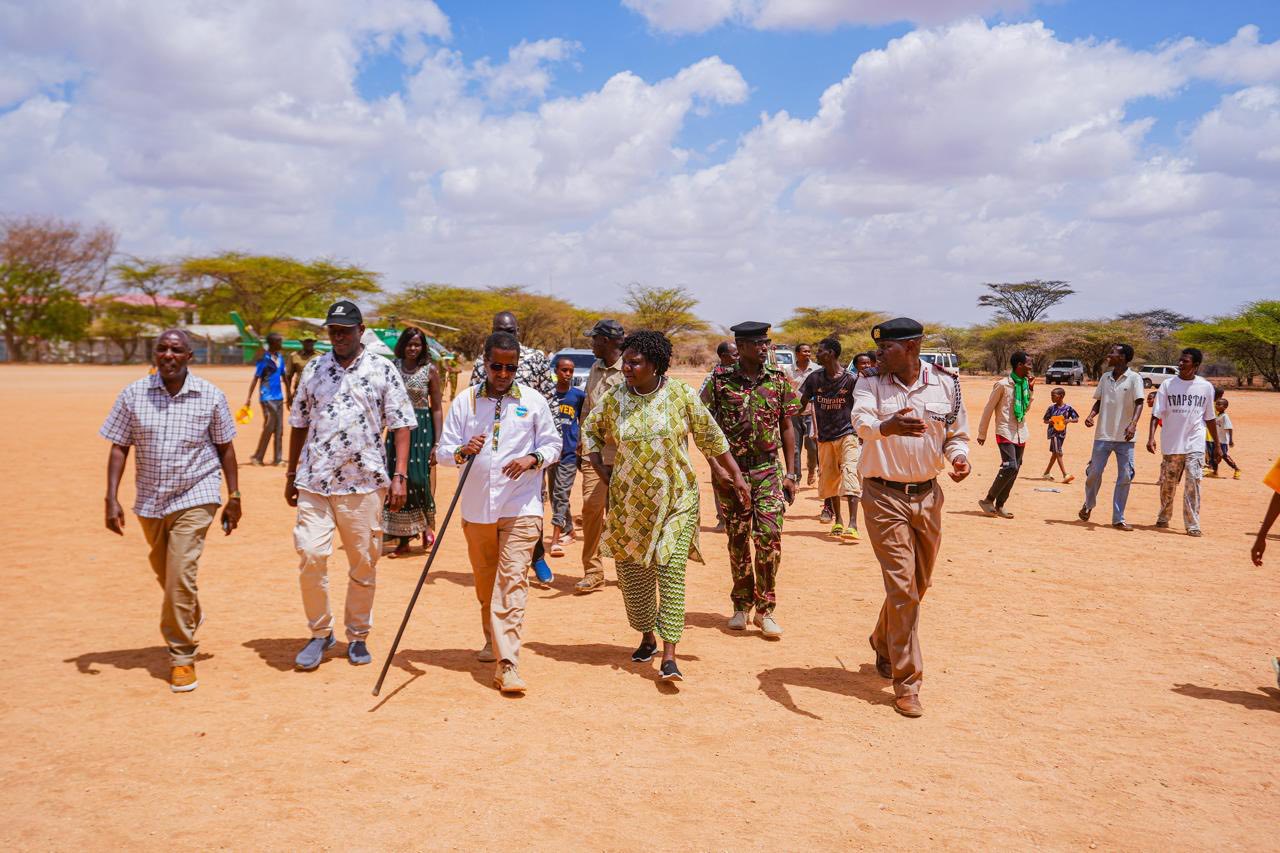
Senior officials present included PS for ASALs and Regional Development Kello Harsama, Garissa Deputy Governor Abdi Dagane, Meru Woman Representative Elizabeth Karambu, NDMA Vice Chairman Gilbert Tenai, NDMA CEO Lt Col. (Rtd) Hared Hassan, and Garissa County Commissioner Mohamed Mwabudzo, among others.
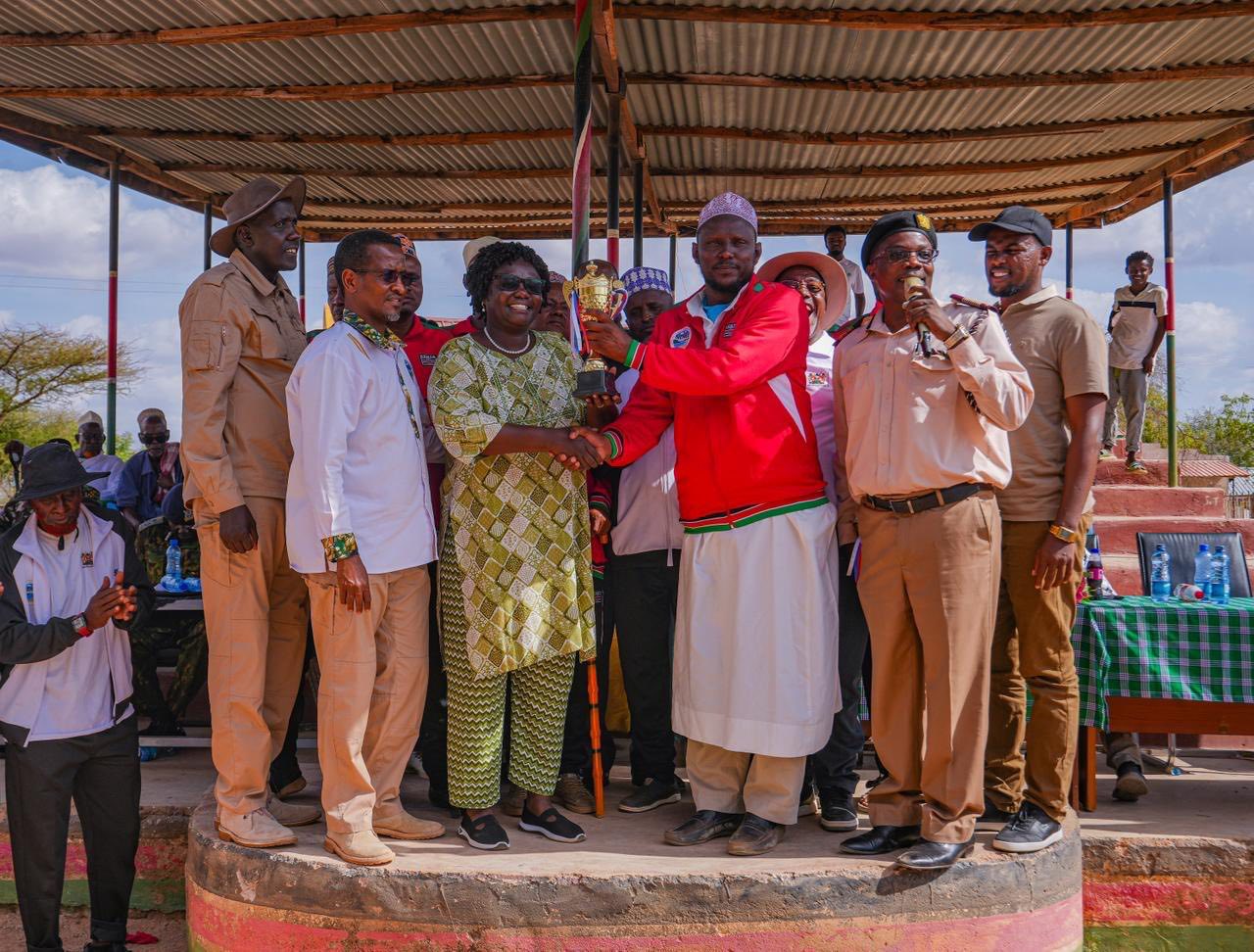
According to NDMA, the Cabinet Secretary also presided over the awarding of trophies to youth and elders’ teams that participated in a peace sports tournament held in Benane, one of the caravan’s stopovers.
The tournament served as a platform for inter-generational dialogue, trust-building and peaceful coexistence, underscoring the importance of cultural and social activities in preventing conflict along pastoral corridors.
The government says such grassroots peace initiatives remain critical as climate-driven drought continues to heighten pressure on natural resources across northern Kenya, threatening stability and livelihoods in already vulnerable pastoral regions.