
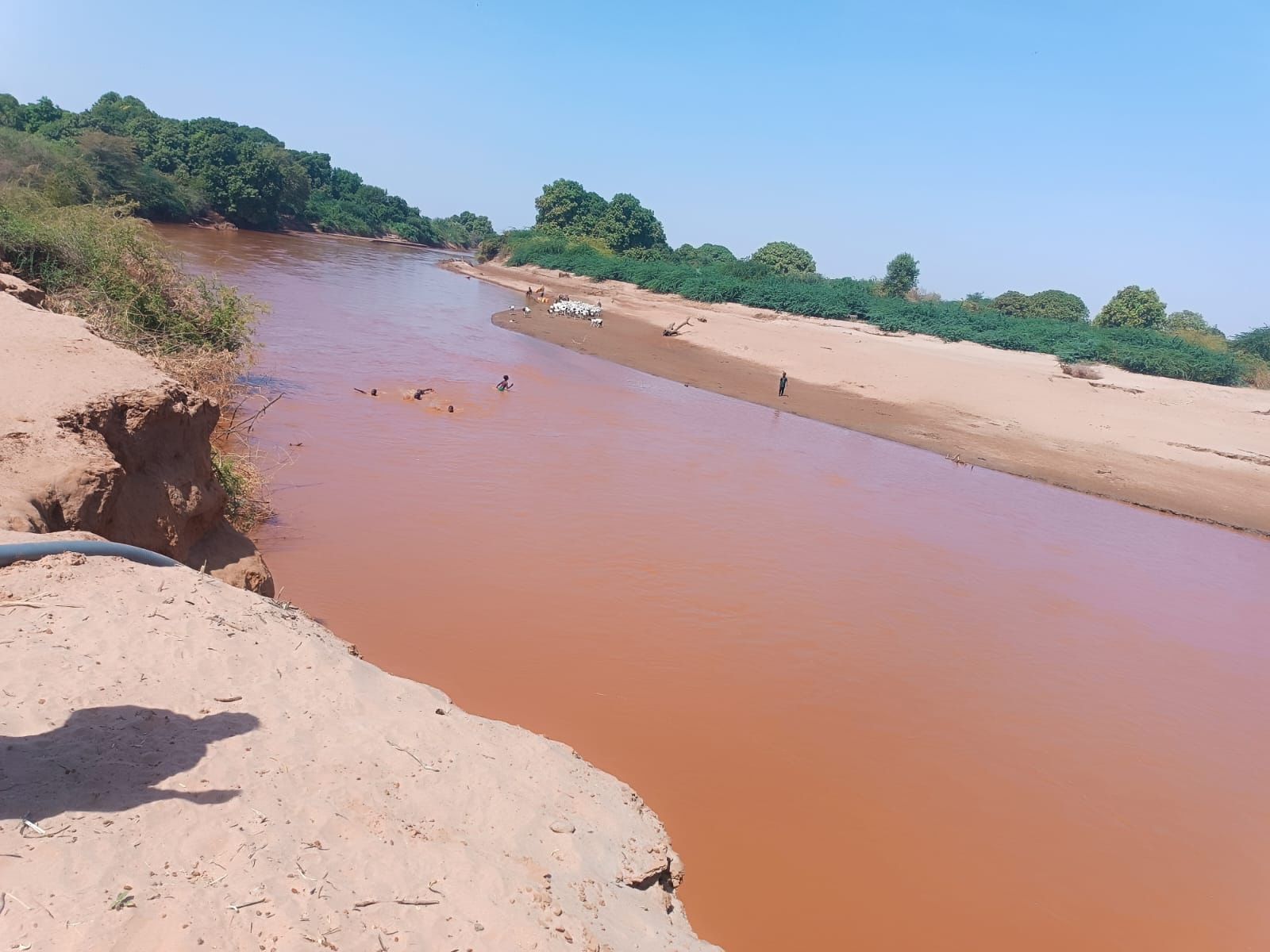
Communities in Mandera County are facing an escalating humanitarian crisis as the River Dawa, one of the county’s most critical water sources, rapidly dries up amid worsening drought conditions.
According to Ahmed Shakur, a Regional Communications Officer monitoring the situation, the decline of River Dawa has triggered severe water shortages for households, increased stress on livestock, and a sharp rise in food insecurity across affected communities.
“River Dawa is a lifeline for Mandera. As it dries up, communities are struggling to access water for domestic use and livestock, while food security continues to deteriorate,” Shakur said, warning that the situation could worsen without urgent intervention.
Pastoralist households, who depend heavily on livestock for both income and nutrition, are among the hardest hit.
With pasture conditions deteriorating and water points failing, livestock body conditions are weakening, increasing the risk of losses and undermining household livelihoods.
The crisis in Mandera mirrors a broader drought emergency unfolding across North Eastern Kenya, a region historically prone to climate shocks.
Consecutive seasons of below-average and poorly distributed rainfall have left large parts of Mandera, Wajir, and Garissa counties grappling with prolonged dry spells.
The current drought follows the devastating 2020–2023 period, during which millions of livestock were lost and thousands of households were pushed into extreme food insecurity.
Although brief rainfall offered temporary relief in some areas, recovery has remained fragile, with water sources, rangelands, and household coping capacities yet to fully rebound.
Humanitarian and county reports indicate that water tracking distances have increased significantly, forcing women and children to spend longer hours in search of water.
At the same time, reduced milk production and rising food prices are compounding nutrition risks, particularly for children, pregnant women, and the elderly.
Shakur has called for immediate, coordinated action by county and national governments, humanitarian agencies, and development partners to avert further deterioration of the situation.
“Urgent and coordinated action is needed now to protect lives and livelihoods,” he said, emphasising the need for emergency water trucking, rehabilitation of strategic boreholes, livestock support interventions, and scaled-up food assistance.