
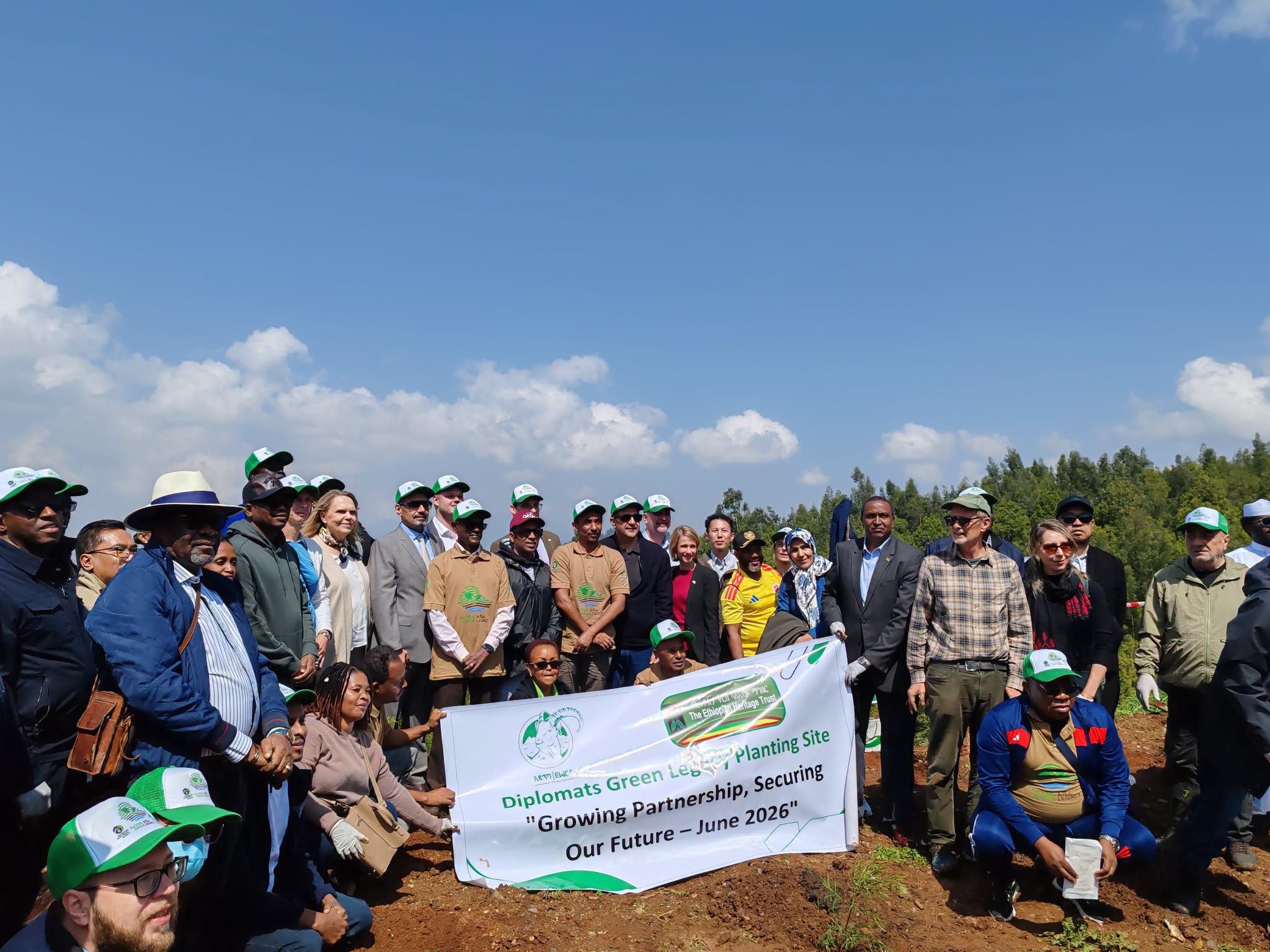
Members of the diplomatic corps and representatives of international organisations based in Ethiopia have joined the country's flagship Green Legacy Initiative (GLI) by planting tree seedlings at Entoto Park, reaffirming their commitment to environmental conservation, climate resilience, and sustainable development.
The symbolic tree-planting exercise underscored the importance of collective global action in addressing the growing impacts of climate change while strengthening partnerships that support environmental restoration and biodiversity conservation.
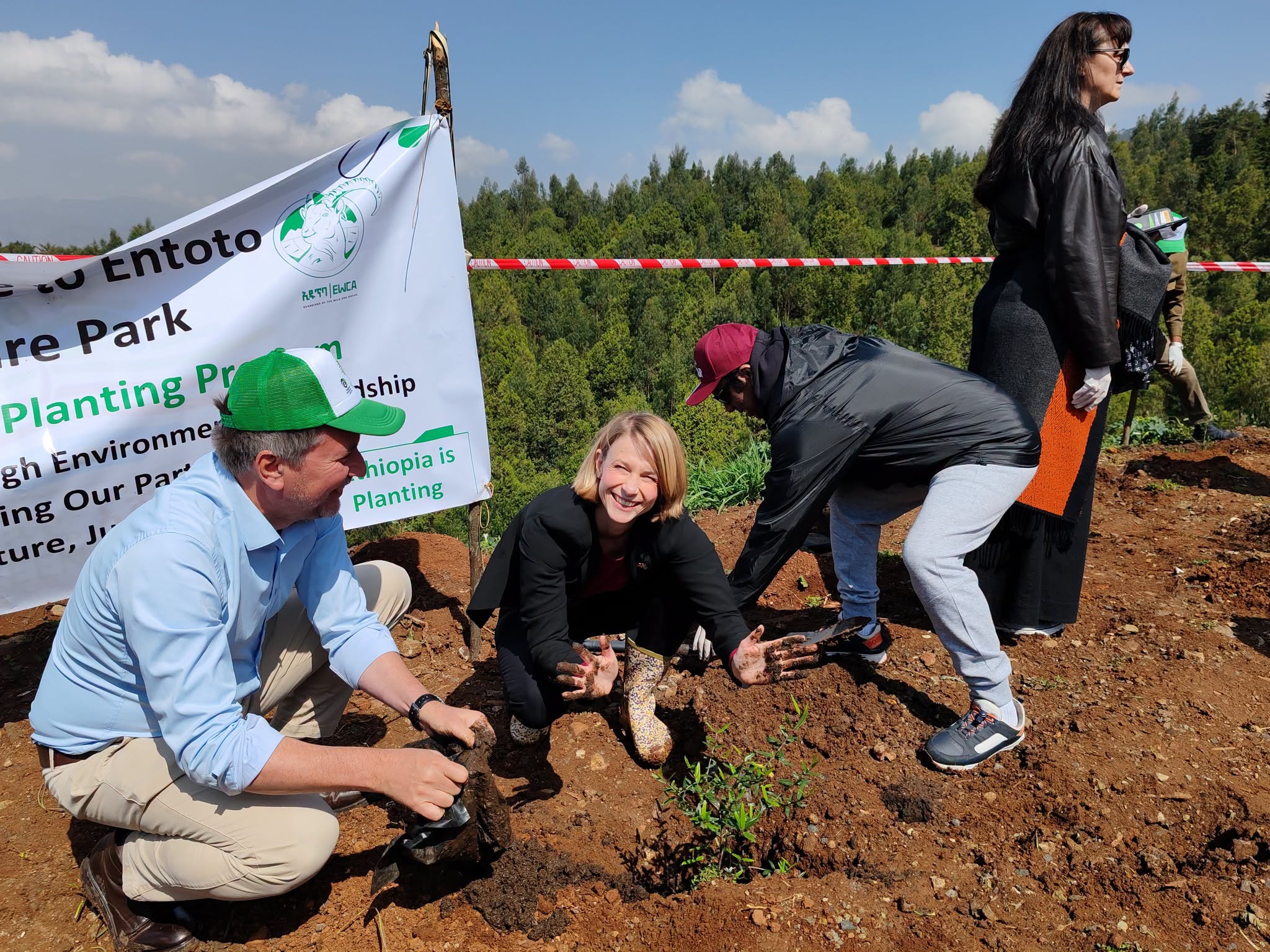
The event brought together ambassadors, diplomats, international development partners, and Ethiopian government officials, highlighting the shared responsibility of governments and the international community in promoting sustainable environmental management and safeguarding natural resources for future generations.
Speaking during the event, Kumara Wakjira, Director General of the Ethiopian Wildlife Conservation Authority (EWCA), described the Green Legacy Initiative as one of the world's largest environmental restoration programmes.
He noted that the initiative has become a transformative national movement focused on restoring degraded landscapes, conserving biodiversity, improving water resources, and strengthening Ethiopia's long-term environmental sustainability.
According to Wakjira, the programme demonstrates how large-scale community participation can accelerate ecosystem restoration while contributing to climate adaptation and sustainable natural resource management.
State Minister of Foreign Affairs Ambassador Hadera Abera said the participation of the diplomatic community reflects growing international recognition of Ethiopia's environmental efforts and reinforces the importance of multilateral cooperation in addressing global climate challenges.
He observed that since the Green Legacy Initiative was launched in 2019, millions of Ethiopians have participated in nationwide tree-planting campaigns that have resulted in the planting of billions of seedlings across the country.
The initiative has contributed significantly to restoring forests, rehabilitating degraded landscapes, enhancing water catchment areas, strengthening climate resilience, and creating green employment opportunities, particularly for young people.
Ambassador Hadera noted that beyond environmental conservation, the programme has become an important pillar of Ethiopia's sustainable development agenda by integrating climate action with livelihood improvement, ecosystem restoration, and community participation.
Members of the diplomatic community praised the Green Legacy Initiative for its inclusive and participatory approach, noting that its success demonstrates the value of engaging citizens, institutions, and international partners in addressing shared environmental challenges.
They further observed that the programme offers valuable lessons for countries seeking practical and scalable solutions to climate change, biodiversity loss, and land degradation.
By encouraging widespread public participation, the initiative has fostered a culture of environmental stewardship while promoting greater awareness of the importance of protecting ecosystems and investing in long-term climate resilience.
The Green Legacy Initiative has increasingly gained international attention as a model for integrating environmental restoration with national development priorities.
Through coordinated action involving government institutions, local communities, development partners, and the private sector, Ethiopia continues to demonstrate how large-scale environmental campaigns can generate lasting ecological, economic, and social benefits.
As climate change continues to pose significant challenges across Africa and beyond, the participation of the diplomatic community in the latest tree-planting exercise reflects a growing consensus that global environmental challenges require shared responsibility and collective action.
The event concluded with renewed calls for stronger international partnerships to accelerate climate adaptation, restore degraded ecosystems, and advance sustainable development.
Organisers expressed confidence that continued collaboration between Ethiopia and the international community will further strengthen efforts to build greener, more resilient societies capable of addressing the environmental challenges of the future.