
A deepening drought crisis is affecting large parts of Kenya, with at least 23 counties experiencing severe dry conditions and an estimated 3.4 million people facing acute food shortages, according to authorities and humanitarian reports.
In the arid expanses of Turkana County, the crisis is stark. Communities are struggling to access basic necessities, with water sources drying up and food becoming increasingly scarce.
In Kainama, residents walk several kilometres daily to a shrinking, hand-dug well, one of the few remaining water sources in the area.
Hundreds of people and their livestock depend on the same shallow well, often waiting for hours to collect small amounts of unsafe water. “We take turns to fetch it because there is so little.
There are many of us, and sometimes we fight over it,” said one resident, describing the daily struggle.
Despite the onset of the rainy season, weather experts warn that many arid and semi-arid regions may receive little to no relief.
The situation is already critical, with at least 800,000 children showing signs of malnutrition nationwide, while livestock deaths continue to undermine livelihoods in pastoral communities.
In Turkana alone, more than 350,000 households are reported to be on the brink of starvation.
“We are suffering from hunger. We don’t have water. Our livestock have died. We have nothing,” said a local elder, highlighting the severity of the crisis.
The drought comes just as the country recovers from one of its worst dry spells in four decades between 2020 and 2023, raising fears that gains made in resilience-building could be reversed.
Experts also point to a troubling paradox: scarcity amid abundance. While communities in northern Kenya face hunger and water shortages, other parts of the country have recorded good harvests.
However, high food prices, poor distribution systems, and widespread poverty have made it difficult for vulnerable households to access available food supplies.
A report by the World Resources Institute indicates that up to 40 percent of food produced in Kenya is lost or wasted annually, even as a significant portion of the population faces severe food insecurity.
Security challenges further complicate the situation. Competition over dwindling resources has heightened tensions in some areas, with incidents of cattle raiding and banditry reported in remote regions, limiting access for both communities and aid providers.
Efforts to address the crisis are ongoing, with government agencies and humanitarian organisations distributing food and water to affected populations.
However, officials warn that resources are stretched thin, and logistical challenges continue to hinder aid delivery to the most remote communities.
Meanwhile, long-term solutions remain under discussion. Turkana is home to vast underground water reserves, including the Napuu and Lotikipi aquifers, discovered in 2013.
While these resources have the potential to supply water for decades, high salinity levels and the cost of purification have slowed their development.
Local leaders and experts are calling for increased investment in water infrastructure, irrigation, and climate-resilient agriculture to break the cycle of recurring drought.
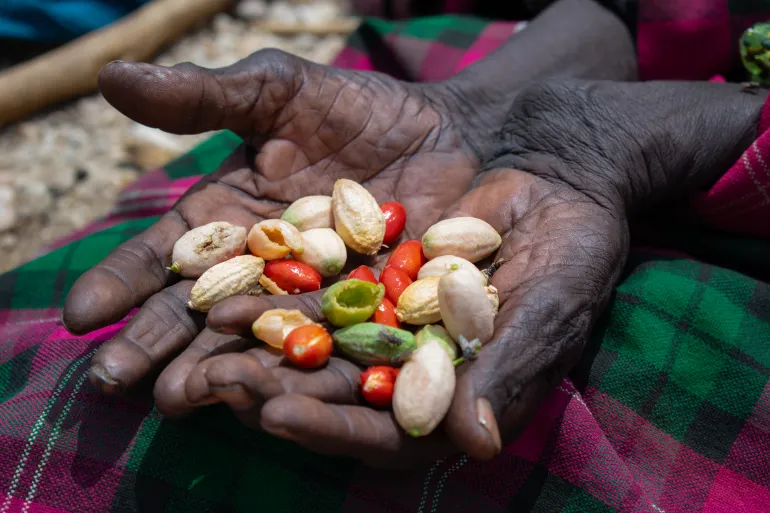
For now, many families are relying on coping mechanisms, such as foraging for wild fruits, to survive. In some villages, residents report going weeks without proper meals, surviving on berries that offer little nutritional value.
As the drought persists, the humanitarian outlook remains fragile. Stakeholders are urging urgent, coordinated action to address immediate needs while accelerating long-term interventions aimed at building resilience and ensuring food security across the country.